
What if the persistent feeling of being rootless isn't a permanent void, but a quiet invitation from the very people who came before you? For many, the desire for ancestral reconnection for Black adults begins as a whisper, especially with research showing the average African American genetic ancestry is approximately 77% West African. You likely recognize this pull, yet you might hesitate because you fear doing a ritual incorrectly or worry about how this journey fits with your current religious upbringing. It's natural to feel confused when faced with various traditions, wondering which gate is yours to open.
You deserve a path that feels both sacred and accessible, one that honors the depth of your history without leaving you overwhelmed. This article provides a structured, respectful framework for reclaiming your African spiritual identity and connecting with your lineage from a modern perspective. We will walk through the practical steps of daily veneration and explore how to build a sense of spiritual belonging within a supportive community. By the end, you'll understand how to turn your search for roots into a disciplined, nurturing practice of self-discovery and ancestral honor.
Key Takeaways
- Understand that ancestral reconnection for Black adults is an active, intentional process of reclaiming your spiritual sovereignty and cultural lineage.
- Explore the foundational pillars of African spiritual identity, including the concept of Asè and the traditional worldview of the soul’s destiny.
- Learn how to establish a respectful and simple ancestral altar at home using elemental foundations like water, light, and sacred mementos.
- Gain a clear checklist for identifying authentic spiritual mentors and educational resources to ensure your journey is grounded in truth.
- Discover how structured, tiered learning levels can provide a steady roadmap for your long-term spiritual growth and community belonging.
What is Ancestral Reconnection for Black Adults?
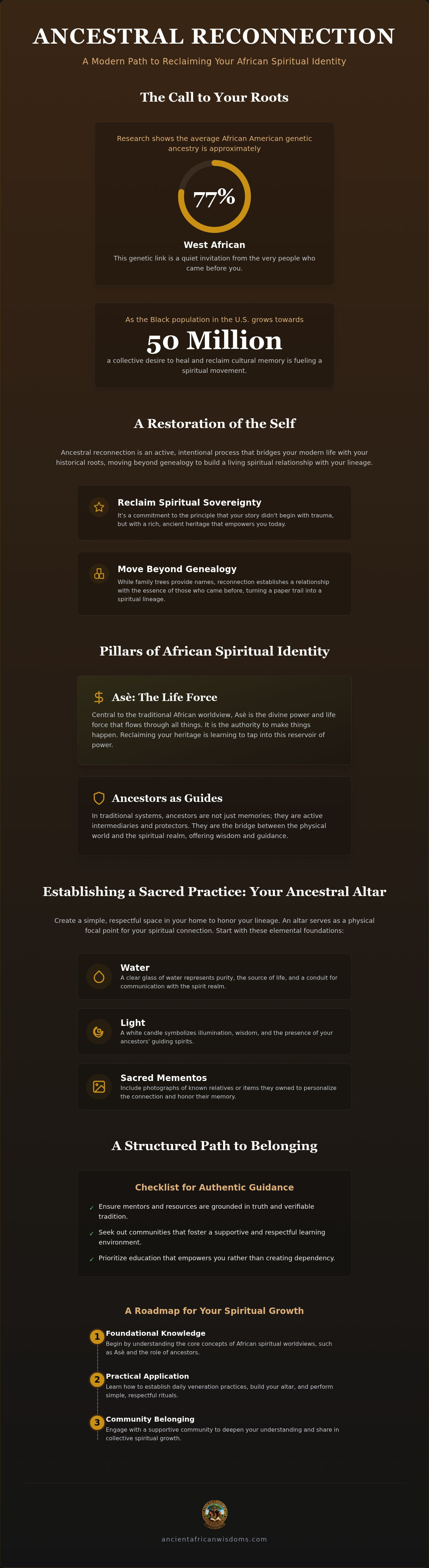
Ancestral reconnection is the active, intentional process of reclaiming your spiritual and cultural lineage. It's far more than an academic exercise; it's a profound restoration of the self that bridges the gap between your modern life and your historical roots. In 2026, we see this movement gaining massive momentum. As the Black population in the United States grows toward 50 million, many are looking past the surface of their daily lives to find something more enduring. This surge is fueled by a collective desire to heal the fractures of the past through "cultural memory," a powerful tool that helps the diaspora reclaim what was once hidden or suppressed.
While the journey often starts with curiosity, ancestral reconnection for Black adults eventually becomes a commitment to spiritual sovereignty. It's a way to say that your story didn't begin with trauma, but with a rich, ancient heritage that still breathes through you today. By reconnecting, you're not just looking backward; you're gathering the tools needed to build a grounded and purposeful future.
The Emotional and Spiritual Call to Return
Do you ever feel a "spiritual hunger" that you can't quite name? This deep-seated sense of being rootless is a common experience for those whose families were disconnected from their original traditions. The historical erasure of African languages, names, and rituals created a silence that many of us still feel. It's important to validate these feelings of displacement rather than dismissing them. Instead of viewing this longing as a void, try to see it as a gentle invitation from the ancestors themselves. They're reaching out, nudging you to explore the legacy that is rightfully yours. This call is the beginning of a journey toward a profound sense of belonging and spiritual safety.
Moving Beyond Genealogy to Spiritual Identity
There's a significant difference between biological records and a living spiritual lineage. Researching African American genealogy is a vital foundation that helps you find names on a family tree and trace the movements of your kin. However, reconnection moves beyond the paper trail. It's about establishing a relationship with the essence of those who came before you. This is why African diaspora identity and spirituality are so closely linked. You aren't just a descendant of people who survived; you're the continuation of a spiritual tradition. Reclaiming this identity allows you to stand in your own power, guided by ancient insights that are as relevant today as they were centuries ago.
The Pillars of Reclaiming African Spiritual Identity
To truly walk the path of ancestral reconnection for Black adults, we must look beyond physical records and into the spiritual architecture of our ancestors. The traditional African worldview doesn't see the soul as a solitary traveler; instead, it recognizes a profound web of connection that links us to the divine, our community, and our lineage. Central to this is the concept of Asè. Asè is the divine power and life force that flows through all things, representing the authority to make things happen. When you begin to reclaim your heritage, you are essentially learning to tap into this reservoir of power that has been waiting for your acknowledgment.
Understanding your lineage is essential for personal growth because it provides a grounded sense of self that no external force can shake. These ancient insights act as a compass, helping you navigate modern life challenges with the quiet confidence of someone who knows they are never truly alone. By reclaiming these pillars, you move from a state of searching to a state of being, rooted in a tradition that is both ancient and remarkably relevant to your current reality.
Understanding Your Spiritual Lineage
In traditional systems, ancestors aren't just memories; they are active intermediaries and protectors. They stand as the bridge between the physical world and the spiritual realm, offering guidance that is both ancient and practical. While history has attempted to break our connection to these roots, there are "unbroken chains" of wisdom that have survived despite centuries of displacement. You can find the physical names of your kin through National Archives resources, but the spiritual connection requires a deeper internal shift. It's a way to reclaim African spiritual heritage so that the generations following you never have to feel the rootlessness you once did. If you are ready to deepen this understanding, exploring ancestral spiritual teachings can provide the steady hand you need.
The Concept of Destiny and Purpose
Every soul arrives in this world with a specific "agreement" or destiny. This isn't a rigid fate, but a sacred potential that you chose before your birth. In an African cosmological context, destiny is the sacred pact between the soul and the Creator that outlines an individual's unique purpose and the spiritual gifts they are meant to share with the world. Your ancestors act as guides on this journey, whispering ancient insights into your heart when you face modern challenges. They want you to succeed because your success is a fulfillment of the lineage's collective purpose. By understanding your destiny, you move from just surviving to thriving with clear intention. Use this knowledge to navigate your daily life with the authority of someone who knows exactly where they belong.
Essential Resources for the Ancestral Journey
Beginning the process of ancestral reconnection for Black adults often feels like standing before a vast library where the books have no titles. You know the wisdom is there, but finding the right shelf requires a steady hand and a clear eye. While the internet offers a flood of information, much of it is fragmented or lacks the traditional framework necessary for genuine growth. Moving beyond random social media threads and towards structured knowledge is the first step in ensuring your journey is both authentic and sustainable.
Community plays a vital role in this progression. Walking this path alone can be daunting, but joining a collective of like-minded seekers provides the mirrors you need to see your own growth clearly. This shared experience is a cornerstone of intergenerational Black healing, as it replaces the isolation of historical erasure with a sense of collective belonging and spiritual safety.
DNA Testing vs. Spiritual Alignment
Many start their search with DNA tests, which can be a powerful emotional doorway. Discovering a genetic link to West Africa provides a tangible connection to a specific region, but a percentage on a map is only the beginning. These tests offer biological data, yet they cannot provide the spiritual context or the living relationship your soul craves. Spiritual alignment often transcends specific tribal markers. It is about the resonance you feel with the traditions themselves and the internal recognition of ancient truths. Use your results as a starting point, but remember that your spiritual identity is built through practice and study, not just a laboratory report.
Evaluating Educational Platforms
As you look for guidance, it is crucial to distinguish between platforms that offer "quick fixes" and those that provide a disciplined path. Authentic traditions are rarely mastered in a weekend. When you are choosing an African diaspora spiritual growth program, prioritize depth and a respect for cultural truths over flashy promises. Look for the following markers of an authentic learning environment:
- Structured Progression: A curriculum that moves methodically from foundational concepts to deeper insights.
- Community Access: Opportunities to engage with others who are also committed to respectful reclamation.
- Grounded Teachings: Lessons that feel relevant to your modern life while remaining rooted in ancient wisdom.
- Ethical Boundaries: A clear avoidance of unauthorized initiations or high-pressure sales tactics.
By choosing a structured educational path, you ensure that your reconnection is built on a solid foundation of truth rather than the shifting sands of internet trends. This disciplined approach honors both your ancestors and your own potential for transformation.
Practical Rituals for Modern Ancestral Connection
Reclaiming your heritage doesn't require a pilgrimage across the Atlantic. While roots tourism is a powerful experience, the heart of ancestral reconnection for Black adults beats right within the walls of your own home. You can establish a profound, living connection through simple, daily rituals that fit into a modern schedule. These practices aren't about "worshiping the dead," but about honoring the blood that flows through your veins and the wisdom that made your life possible. By creating a dedicated space, you invite the ancient insights of your lineage into your daily reality.
Creating a Sacred Space at Home
Setting up an altar is a grounded way to begin your journey. It doesn't need to be elaborate or expensive; its power lies in your consistency and intent. Follow these steps to build your foundation:
- Step 1: Choose a Location. Find a clean, quiet spot in your home where you won't be disturbed. Whether it's a small shelf or a corner of a desk, the physical location matters less than the intention you bring to it.
- Step 2: Cleanse the Space. Physically wipe down the surface. Energetically, you can use salt water or the smoke from dried herbs to clear the area, creating a "blank canvas" for your connection.
- Step 3: Arrange the Elements. Place a clear glass of fresh water on the surface to represent clarity and life. Add a single white candle to symbolize light and the path of the ancestors. You may also include photographs or mementos of loved ones who have transitioned.
An ancestral altar serves as a sacred conduit for communication between the physical world and the spiritual realm. It is a place where you can sit in silence, offer thanks, and listen for guidance.
The Art of Daily Veneration
It's vital to understand the difference between ancestral veneration and worship. Veneration is the act of honoring and remembering your kin, while worship is reserved for the Divine. For busy adults, consistency is always more important than complexity. A simple morning affirmation can be as powerful as a long ceremony. Try standing before your altar and saying, "I honor the ones who came before me. I carry your strength in my bones and your wisdom in my heart. Guide my steps today."
Some people hesitate because they fear "inviting in the wrong spirits." Remember that you are calling upon your own bloodline. Your ancestors are your primary protectors; they have a vested interest in your success because you are their living legacy. Focus your thoughts on the known elders and those who transitioned with love and wisdom. This focus creates a spiritual safety net that keeps your practice grounded and protective. If you are ready to integrate these practices into a more structured life path, explore our spiritual rituals for guided support.
Structured Learning with the African Ancestral Traditional School
While setting up an altar is a beautiful beginning, sustaining a lifelong practice of ancestral reconnection for Black adults requires more than just physical elements. It demands a roadmap. The African Ancestral Traditional School provides this through tiered learning levels designed to move you from curiosity to deep, grounded understanding. This structured environment ensures that you don't feel overwhelmed or judged as you explore your heritage. By moving through specific levels, you build a foundation of knowledge that feels both ancient and relevant to your life today. How do you bridge the gap between where you are now and where your ancestors once stood? The answer lies in a steady, disciplined approach to learning.
Digital learning has transformed how we access our heritage, making authentic African culture accessible to the global diaspora regardless of your physical location. You don't need to cross an ocean to find your way home; the path is available through your screen. This approach respects the historical precedent of community-based education while adapting to the rhythms of modern life. It offers a sense of spiritual safety for those seeking to reconnect without the pressure of physical travel or inaccessible local groups.
The Benefits of a Tiered Curriculum
A structured curriculum prevents the confusion that often comes from self-guided internet research. At Level 1, you focus on building a solid foundation of understanding before moving into ritual practice. This discipline is essential for your spiritual growth and ensures your practice remains authentic. Having a wise, patient mentor to guide you through these digital courses means you always have a steady hand to hold. The school creates a nurturing environment where you can ask questions and reflect on your place within the larger framework of your lineage. It's a journey of progression, starting with internal development before expanding into external expression.
Joining a Global Community of Seekers
One of the greatest challenges of reconnection is the feeling of being "the only one" in your family or social circle who is seeking these truths. Community access changes this dynamic entirely. When you join a global community of seekers, you find a sense of belonging that heals the isolation of the diaspora experience. You'll connect with others who share your spiritual hunger and your commitment to reclaiming cultural truths. This shared growth is a powerful form of collective heritage restoration that makes the journey feel less daunting.
Take the first step toward your ancestral home through education. By choosing a structured path, you honor the complexity of your history and the potential of your future. The ancestors have been waiting for this moment; now is the time to answer the call with clarity and purpose. Explore the various school levels and find the place where your journey truly begins.
Step Into Your Spiritual Sovereignty
Reclaiming your heritage is a journey of restoration that transforms a sense of rootlessness into a profound feeling of belonging. You've seen that ancestral reconnection for Black adults moves beyond simple DNA percentages and into a living relationship with those who came before you. By establishing a home altar and committing to daily veneration, you begin to tap into the divine power of Asè, allowing ancient insights to guide your modern path.
You don't have to navigate this path in isolation. Access to a global community of diaspora seekers provides the spiritual safety needed for true growth. Our tiered curriculum offers structured, ancient wisdom specifically adapted for modern digital learning, ensuring your education is guided by traditional principles of authenticity and respect. Begin your journey today with the African Ancestral Traditional School Levels and reclaim the legacy that has always been yours. Your ancestors are waiting for you to take this step.
Frequently Asked Questions
How do I reconnect with my ancestors if I don’t know my specific African tribe?
You can begin by addressing the unknown ancestors of your bloodline, as your DNA carries their essence even without a specific tribal name. While research shows many in the diaspora have roots in West Africa, the connection is spiritual rather than just geographic. Focus on the intention of your heart and the continuity of your lineage. They know who you are. Specific cultural insights often reveal themselves through synchronicity as you progress.
Is ancestral reconnection the same as practicing a religion?
Ancestral reconnection is primarily a spiritual and cultural practice focused on honoring your lineage rather than a dogmatic religion. It centers on the recognition of your family's continuity and the reclamation of your identity. While it involves rituals and a traditional worldview, it doesn't require you to abandon your personal belief system. It acts as a bridge to your historical roots, offering a grounded sense of belonging that complements your existing path.
Can I still reconnect with my ancestors if I am a practicing Christian or Muslim?
You can absolutely maintain your current faith while engaging in ancestral reconnection for Black adults. Most traditional African perspectives view ancestors as family elders who have transitioned to the spiritual realm, rather than as deities. Honoring them is an act of respect similar to keeping family photos or visiting a gravesite. By integrating these practices, you are simply acknowledging the people whose lives made your own possible, which often deepens your spiritual grounding.
What is the first thing I should do to start my ancestral journey?
The most effective first step is to set a clear, reverent intention to learn and connect. You can begin by placing a clean glass of water on a dedicated surface in your home. This simple act creates a conduit for communication and signals your readiness to your lineage. Speak your name and the names of the elders you remember. This small, consistent action builds the foundation for deeper study and the reclamation of your heritage.
Do I need to travel to Africa to be properly connected to my lineage?
Physical travel is not a requirement for an authentic connection to your ancestors. While heritage tourism is a growing trend for many in the diaspora, the heart of your lineage lives within your own DNA and spirit. You can access ancient insights and perform meaningful rituals from wherever you are in the world. Structured digital learning and home-based practices ensure that your reclamation journey is accessible, practical, and deeply personal without international travel.
How do I know if my ancestors are actually hearing me?
You will often recognize their presence through subtle shifts in your environment or internal state. This might manifest as a sudden sense of calm, a vivid dream, or a meaningful synchronicity in your daily life. Sometimes, the answer is a quiet nudge toward a specific piece of information or a person who can help you. Trust the process and stay observant. Consistency in your practice allows you to develop a spiritual ear for their guidance.
Is it safe to set up an ancestral altar in my home?
Setting up an ancestral altar is a safe and sacred practice when approached with respect and clear boundaries. Your ancestors are your primary protectors and have a natural interest in your well-being. By focusing your intention on the elevated ancestors or those who transitioned with love, you create a protective environment. This space becomes a sanctuary for reflection and growth, providing a structured way to honor your heritage within the safety of your own living space.
What is the difference between ancestor veneration and ancestor worship?
Veneration is the act of showing deep respect and honor to your kin, much like you would respect an elder in your community. Worship is typically reserved for the Creator or the Divine Source in African traditional systems. By practicing ancestral reconnection for Black adults, you are acknowledging the wisdom and sacrifices of your predecessors. You aren't treating them as gods, but as vital members of your extended family who continue to offer guidance.


