
What if the persistent, quiet longing you feel in your spirit isn't just a search for identity, but a direct call from those who came before you? For many seekers, the practice of ancestral veneration for the African diaspora feels like a forbidden door, locked by generations of displacement and the heavy weight of misunderstood traditions. It's natural to feel a deep sense of loss when the bridge to your heritage has been obscured by history. You might fear that starting a practice is too complex or that you'll accidentally step into territory that conflicts with your current beliefs.
We understand the weight of this spiritual hunger and the desire for a path that feels both authentic and safe. This article will show you how to bridge the spiritual gap of the diaspora and build a meaningful, structured connection with your ancestors. We'll clarify the difference between veneration and worship, provide practical steps to begin a daily practice at home, and introduce you to a community where your journey is honored. You're about to transform your search for roots into a living, breathing source of strength and guidance.
Key Takeaways
- Understand the history of the "Great Rupture" to appreciate why reclaiming your spiritual heritage is essential for personal healing and identity restoration.
- Explore the hierarchy of the spiritual realm and learn how Asè, the divine life force, flows through your lineage to empower your modern journey.
- Resolve common fears about "idol worship" by discovering how ancestral veneration for the African diaspora focuses on respectful communication and sacred remembrance.
- Implement a structured, five-step daily practice that allows you to honor your ancestors with sincerity and consistency from the comfort of your own home.
- See why the African Ancestral Traditional School offers a more secure and effective path to spiritual growth than trying to navigate these ancient traditions alone.
The Spiritual Call of the Diaspora: Why Ancestral Veneration Matters Today
The search for self often leads to a quiet realization that we aren't walking this path alone. Ancestral veneration is a sacred dialogue between the living and the spirit world; it's a bridge that spans the physical and metaphysical. For many, reclaiming ancestral veneration for the African diaspora isn't just a hobby. It's a profound necessity for identity restoration. By acknowledging those who came before, you begin to heal the psychological and spiritual fragmentation that often accompanies a disconnected lineage. This practice offers a way to ground yourself in a narrative that's much older and deeper than your current circumstances.
Bridging the Gap of the Great Rupture
The "Great Rupture" refers to the massive, forced separation caused by the transatlantic slave trade. This historical event didn't just move bodies; it attempted to sever the spiritual technologies that had sustained African families for millennia. This disconnection left a spiritual void that many still feel today. Reclaiming these practices acts as a tool for healing historical trauma, allowing you to transform a sense of loss into a source of power. A 2021 Pew Research Center study found that 15% of Black adults in the U.S. pray at a home altar or shrine at least once a week, showing a quiet but steady return to these ancient roots.
Defining Ancestral Veneration in a Modern Context
Modern practice is about more than just looking at old photographs or researching family trees. While historical curiosity is a starting point, true veneration involves an active spiritual relationship. In this framework, ancestors are viewed as living spirits who continue to offer guidance and protection to their descendants. General concepts of the Veneration of the dead exist across many cultures, but for the diaspora, it carries a unique weight of reclaiming what was once hidden. It's a process of restoring sacredness to everyday life.
Ancestral veneration is a structured practice of lineage recognition that honors the wisdom and presence of those who have transitioned to the spirit realm.
Reclaiming this practice provides a sense of belonging that modern, globalized society often lacks. It offers spiritual safety and a clear sense of purpose. This journey requires a thoughtful approach to ensure you're building a healthy, respectful connection. While many start this path alone, seeking guidance from an established framework like the African Ancestral Traditional School ensures that your practice is built on a foundation of authenticity and safety. You don't have to navigate the restoration of your heritage without a steady hand to guide you.
Understanding the Ancestral Realm: Lineage, Spirits, and Divine Power
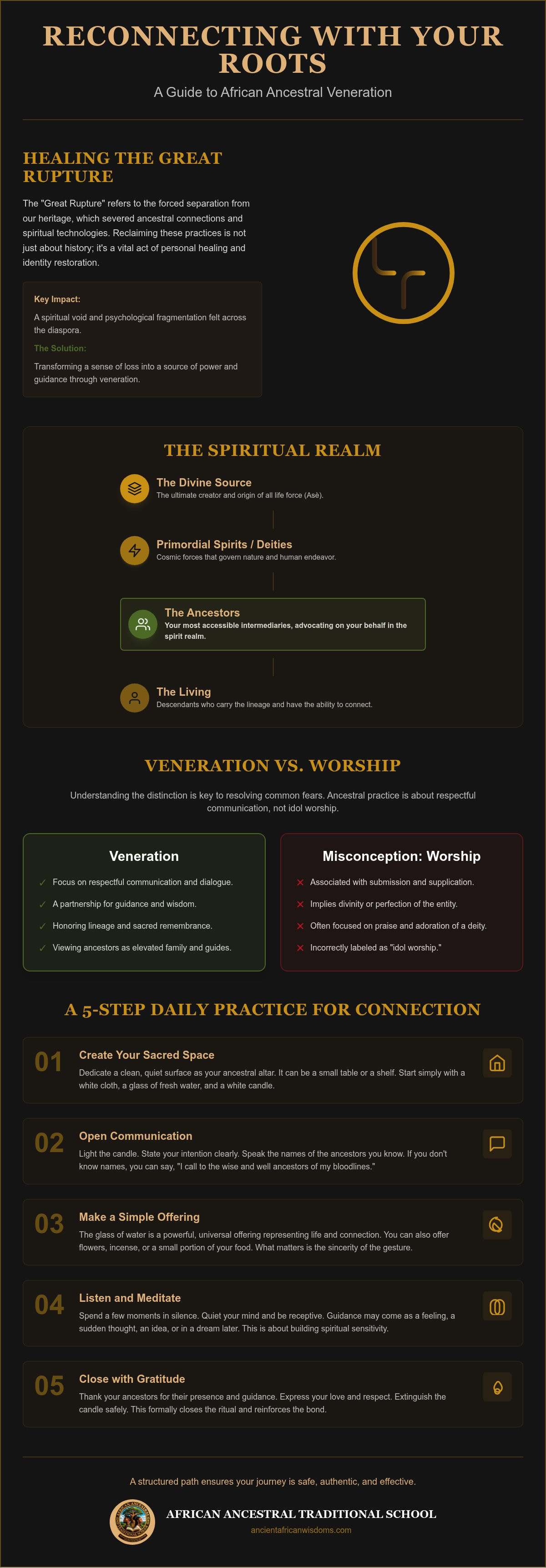
In many African traditions, the universe is viewed as a beautifully structured hierarchy. At the summit is the Divine Source, followed by primordial spirits or deities, then the ancestors, and finally, the living. Ancestors hold a unique position in this cosmic order because they've walked the earth. They understand the weight of human experience, from the sting of grief to the warmth of joy. Because of this shared history, they act as the most accessible intermediaries between humanity and the Divine. They're your advocates in the spirit realm, translating your needs into the language of the sacred.
It's helpful to distinguish between blood ancestors and spiritual ancestors. Blood ancestors are your direct biological kin, the people whose DNA flows through your veins. Spiritual ancestors include those who may not be related by blood but share your culture, purpose, or struggle. For those reclaiming ancestral veneration for the African diaspora, recognizing both groups creates a wider net of protection. Whether they are named or unnamed, these spirits form a collective force dedicated to your success and well-being.
The Concept of Lineage and Continuity
Knowing your specific tribe or ethnic group is a powerful goal, but it isn't a prerequisite for connection. Your ancestors know exactly who you are, regardless of the records lost to time. In the African worldview, time isn't a straight line; it's a circle where the past and present coexist. Your lineage acts as a spiritual anchor, keeping you steady in a world that often tries to erase your history. This connection is especially vital when Honoring the Slaves As Ancestor Reverence, as it acknowledges the resilience of those whose names were stripped away but whose spirits remain vibrant and present.
Asè: The Breath of Divine Power in Ancestral Connection
Asè (Ase) is the fundamental energy that makes things happen. Think of it as the divine life force that flows through every living being, every stone, and every spirit. When you engage in veneration, you're not just remembering the dead; you're cultivating and directing this power. Asè is often activated through the spoken word. When you call out the names of your ancestors or offer sincere prayers, your breath carries this divine energy into the world. Rituals serve as a container for this power, allowing you to harness it for protection, clarity, and guidance in your daily life.
If you're ready to deepen your understanding of these ancient teachings, focusing on the flow of energy and lineage is the first step toward a transformative practice. You're not just learning a history; you're reclaiming a living power that belongs to you by right of birth.
Veneration vs. Worship: Healing Misconceptions of African Spirituality
The most frequent barrier people face when considering ancestral veneration for the African diaspora is the fear of "idol worship." This concern often stems from a lack of clear definitions. In traditional African systems, there is a profound distinction between the Creator and the ancestors. Worship is reserved for the Ultimate Source of all life. Veneration, on the other hand, is an act of deep respect, remembrance, and communication. It's similar to how you might honor a beloved grandparent's legacy or seek advice from a wise elder, just extended into the spiritual realm. By recognizing ancestors as intermediaries, as discussed earlier, you aren't replacing the Divine; you're simply acknowledging the family members who have a seat at the table of the spirit world.
This practice is remarkably compatible with various personal belief systems. Many people find that honoring their lineage actually deepens their existing faith by providing a grounded, cultural context for their spirituality. You don't have to choose between your current path and your ancestors. Instead, you can view them as partners in your spiritual growth, offering a unique perspective that only those of your own blood and history can provide.
Deconstructing Colonial Narratives
For centuries, colonial powers deliberately mischaracterized African spiritual practices as "primitive" or "pagan" to justify the suppression of indigenous cultures. They effectively used religion as a tool of psychological and social control. By labeling these traditions as demonic or backward, they severed the diaspora's connection to their own spiritual technologies. Reclaiming this knowledge today isn't about rejecting modern life. It's about stripping away those harmful labels and recognizing the sophistication of your heritage. You have the right to explore your roots without the shadow of inherited shame.
The Ethical Framework of Ancestral Guidance
African spirituality is deeply rooted in character and community accountability. Your ancestors aren't just passive observers; they act as a moral compass that holds you accountable to your destiny and your people. They encourage you to live with integrity, as your actions today become the legacy for those who follow you. This character-based focus ensures that your spiritual practice remains grounded in real-world growth and service to the collective. Ancestors are honored for their wisdom, not worshipped as the Ultimate Creator. This distinction allows you to build a relationship based on mutual respect and the shared goal of elevating your entire lineage.
Practical Steps for Reconnecting with Your African Roots
Beginning a practice of ancestral veneration for the African diaspora doesn't require a collection of expensive artifacts or a complex initiation. It requires a heart that's ready to listen and a commitment to consistency. The process is a journey of restoration, turning the "Great Rupture" into a bridge of reconnection. You can start this journey today by integrating a few intentional steps into your modern life. Sincerity of heart is the most potent tool you possess; your ancestors value the quality of your attention far more than the cost of your tools.
One of the most powerful spiritual acts you can perform is genealogical research. In our modern era, "Digital Ancestry" allows us to use online archives and DNA technology to reclaim names that were nearly erased by history. Finding a name is like finding a key. When you uncover a record of an ancestor, you aren't just doing paperwork; you're performing a ritual of remembrance that pulls their spirit back into the family's conscious awareness.
Creating a Sacred Space: The Ancestral Altar
An altar serves as a physical focal point for your spiritual dialogue. It doesn't need to be elaborate to be effective. A simple, dedicated space in a quiet corner of your home is sufficient. Use the following checklist to set up your basic altar:
- A White Cloth: Represents purity, peace, and the coolness of the spirit realm.
- A Glass of Fresh Water: Water acts as a portal and a medium for communication; it's the element that connects all worlds.
- A White Candle: Provides light to guide the spirits and symbolizes the presence of divine energy.
- Photographs or Mementos: Visual anchors that help you focus your intent on specific lineage members.
Place your altar in a clean area where you can reflect without being disturbed. Treat this space with reverence, keeping the water fresh and the cloth clean, as it reflects the health of your spiritual connection.
Rituals of Remembrance and Daily Connection
Once your space is set, establish a rhythm of connection. A simple daily libation is a beautiful way to start. Pour a small amount of water into a plant or onto the earth while speaking the names of those who came before you. This act acknowledges their presence and cools their path toward you. You might also offer a simple prayer, asking for their guidance and protection throughout your day.
Seeking deeper guidance often involves learning about "Afa" or other divination concepts that help clarify the messages you receive. Pay close attention to your dreams and intuition. Ancestors often speak in "whispers"—a sudden thought, a vivid dream, or a repeating pattern in your life. These aren't coincidences; they're invitations to look deeper. If you feel called to bring more structure to your practice, you can explore our Ancestral Spiritual Teachings to learn authentic rituals designed for the modern home.
Structured Learning: Reclaiming Identity through the African Ancestral Traditional School
While the initial spark of connection often happens in private, sustaining a long-term practice requires a solid foundation. Many seekers find that "DIY" spirituality, though well-intentioned, often leads to a cycle of confusion and second-guessing. The African Ancestral Traditional School serves as a steady hand for those navigating this complex terrain. It transforms the overwhelming task of reclaiming ancestral veneration for the African diaspora into a clear, manageable path of discovery. By following a structured curriculum, you move away from the anxiety of "doing it wrong" and toward a place of quiet confidence and spiritual safety. You deserve a path that's as disciplined as it is nurturing.
This structured approach is particularly vital for those who feel the weight of the "Great Rupture" most heavily. When so much has been lost, a random collection of facts isn't enough to rebuild a spiritual identity. You need a system that respects the ancient weight of these traditions while making them accessible for your current life. The school provides exactly that, acting as an authoritative custodian of cultural truths that have been preserved for generations.
The Journey through Tiered Spiritual Levels
Learning is a progressive journey that mirrors the steady pace of a ritualistic process. Our system is designed to meet you where you are, whether you're just starting to explore your roots or looking to deepen an existing practice. You begin with foundational knowledge that grounds you in the core principles of African culture and tradition. As you advance, you'll explore more complex spiritual philosophies and learn to perform authentic rituals within your own home. This methodical approach ensures you aren't just memorizing facts, but truly integrating these ancient insights into your modern life. For those seeking a comprehensive roadmap, exploring our African ancestral spirituality courses provides the clarity and depth needed to move forward with purpose.
Building Community in the Digital Diaspora
Isolation is one of the most significant challenges for the modern seeker. Without a "village" to offer support and validation, it's easy to feel like an outsider within your own heritage. The African Ancestral Traditional School acts as a modern, digital village, connecting you with a like-minded community across borders. This collective environment helps preserve cultural memory and offers a space where you can share experiences and grow alongside others. Digital platforms have made it possible to bridge the physical gaps created by history, allowing for authentic connections that were once impossible. Embracing this structured environment is the first step toward self-discovery and the full restoration of your spiritual identity. You don't have to walk this path alone; your community and your ancestors are waiting to welcome you home.
Step into Your Spiritual Legacy
Reclaiming your heritage is about more than just looking back; it's about restoring a living, breathing connection that empowers your future. You've seen how ancestral veneration for the African diaspora serves as a structured technology for identity restoration, bridging the gap between historical loss and spiritual presence. By understanding the flow of Asè and establishing simple, daily rituals, you transform the "Great Rupture" into a bridge of profound guidance. This journey doesn't have to be a solitary one. You can find your place within a modern village that honors the weight of tradition while supporting your individual growth.
If you're ready to move beyond "DIY" spirituality, we invite you to begin your journey of reclamation with our structured school levels. You'll gain access to a global community of seekers and authentic teachings from custodians of tradition who understand your path. Each tiered level is designed to offer clarity and spiritual safety as you navigate your self-discovery. Your ancestors are already walking beside you. It's time to acknowledge their presence and reclaim the wisdom that is yours by right of birth. You are the manifestation of their resilience, and your restoration starts today.
Frequently Asked Questions
What is the difference between ancestor veneration and worship?
Veneration is a practice of honoring your lineage and acknowledging their continued presence in your life, while worship is reserved exclusively for the Divine Source of all creation. Think of it as the difference between praising a King and honoring a beloved parent who has passed. By practicing ancestral veneration for the African diaspora, you're maintaining a sacred dialogue with those who understand your struggles. They act as mentors and advocates, not as gods.
How do I honor my ancestors if I do not know my specific African tribe?
Your ancestors know exactly who you are even if the historical records were lost during the Great Rupture. You can honor them by simply addressing them as "my ancestors whose names I don't know, but whose blood flows through me." Sincerity and intent matter more than specific tribal names. As you deepen your practice of ancestral veneration for the African diaspora, your lineage may reveal more about your heritage through dreams or intuition.
Can I practice ancestral veneration if I am a Christian or Muslim?
Many people find that honoring their ancestors actually strengthens their existing faith by providing a cultural and historical foundation. Veneration is about family connection and legacy rather than a competing religious doctrine. You aren't replacing your God; you're simply acknowledging the family members who came before you. It's helpful to view them as spiritual elders who pray for you and guide you, much like a living elder would in your community.
What are the basic items needed for an ancestral altar?
You only need a few simple elements to create a powerful focal point for your connection. A basic altar usually includes:
- A clean white cloth to represent purity and peace.
- A glass of fresh, cool water to act as a portal for communication.
- A white candle to symbolize the light of presence.
- Photographs or mementos of your deceased relatives.
Consistency in maintaining this space is far more important than the cost of the items you choose.
How do I know if my ancestors are hearing me?
Communication from the spirit realm is often subtle and requires you to develop a listening ear. You might notice vivid dreams that feel different from usual, or a sudden, clear thought that provides a solution to a problem. Sometimes they speak through synchronicities, like seeing a specific bird or hearing a song that reminds you of them. Pay attention to the quiet whispers in your intuition. These signs will become more recognizable over time.
Is it safe to practice African spiritual rituals at home?
It's perfectly safe to practice these rituals at home when you approach them with respect and a clear, grounded mind. Using a structured curriculum helps you avoid the confusion of "DIY" spirituality and provides a sense of spiritual safety. By focusing on your own blood lineage and following established traditions, you create a protective environment for your growth. Rituals like pouring libations are ancient technologies designed to bring peace into your modern living space.
What is the role of Asè in my spiritual practice?
Asè is the fundamental divine energy that allows you to manifest change and direct your intentions. Every word you speak and every ritual action you take is fueled by this life force. In your practice, you cultivate Asè to strengthen your connection with your lineage and to bring your prayers into physical reality. It's the breath of your spiritual work. Without Asè, a ritual is just a performance; with it, your practice becomes transformative.
How do digital courses help with traditional African spirituality?
Digital courses bridge the physical gap of the diaspora by offering authentic teachings that you can access from anywhere in the world. The African Ancestral Traditional School provides a tiered learning system that moves you through progressive levels of understanding. This structure is essential for those who don't have access to a local village or elder. It offers a safe, disciplined environment where you can learn rituals at your own pace while connecting with a global community.


