

Waist beads are more than adornment, but their meaning isn’t the same in every community. People from many backgrounds wear them, and understanding the traditions behind them helps you approach them with care and respect.
If you’re drawn to their beauty or symbolism, it’s natural to wonder what they represent and whether wearing them is right for you. The spiritual significance of waist beads can include femininity, fertility, confidence, well-being, or a personal intention, depending on the wearer and cultural context.
Explore how meanings differ across traditions, how colors and materials may shape a wearer’s personal connection, and why waist beads can mark a coming-of-age transition. You’ll also learn how they’re commonly worn and how to understand their significance without assuming one meaning applies to everyone.
Key Takeaways
- Explore how color symbolism can vary across communities, then consider what personal intention you want your beads to hold.
- Understand how spiritual meanings may connect waist beads with confidence, well-being, or protection without assuming every tradition shares the same beliefs.
- Learn how materials and placement around the waist or hips shape the way beads are worn and experienced.
- Recognize how waist beads can mark coming-of-age traditions and carry cultural knowledge across generations.
What's the Meaning Behind Waist Beads Today?
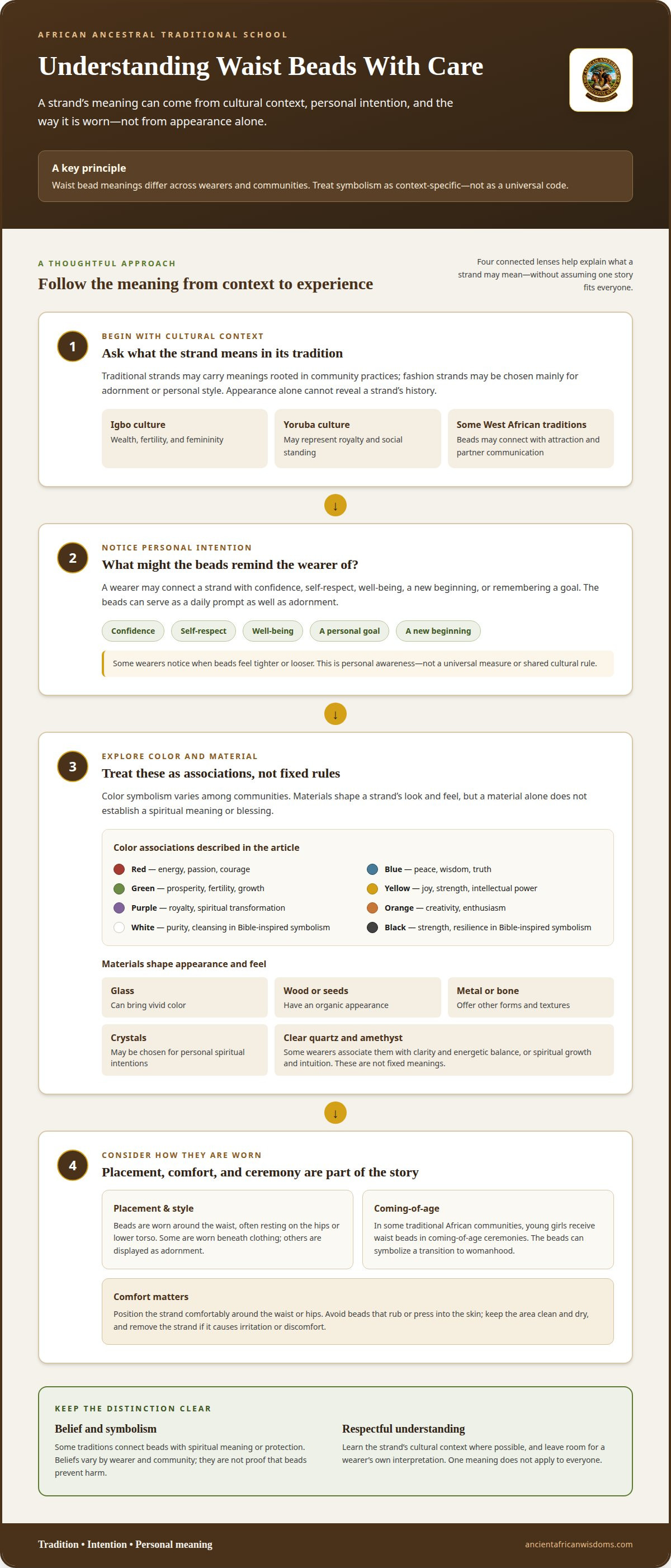
Waist beads may symbolize beauty, femininity, fertility, maturity, or personal goals. Their meaning depends on the wearer and community, and traditional and fashion strands can overlap.
Personal Intentions and Symbolic Meanings
Personal intentions are meanings a wearer chooses to attach to beads, such as confidence, self-respect, or remembering a goal. A strand can become a daily prompt, not just decoration. Someone might connect their beads with caring for their well-being or honoring a new beginning. Some wearers also notice bodily changes when a strand feels tighter or looser. That observation is personal, not a universal measure or shared cultural rule.
Traditional and Fashion Waist Beads
Traditional strands may carry meanings rooted in a community’s practices. Fashion strands are often chosen chiefly for adornment or personal style. Appearance alone can’t identify a strand’s history. In Igbo culture, waist beads symbolize wealth, fertility, and femininity. In Yoruba culture, they may represent royalty and social standing. Some West African traditions connect beads with attraction and communication between partners. A wearer may choose a contemporary strand for its look without claiming a communal meaning.
Color Symbolism
Color symbolism adds another layer, but meanings vary among communities. Red may signify energy, passion, and courage; blue, peace, wisdom, and truth. Green is linked with prosperity, fertility, and growth. Yellow may suggest joy, strength, and intellectual power; purple, royalty and spiritual transformation. Orange can express creativity and enthusiasm. In Bible-inspired symbolism, white may represent purity and cleansing, while black can signify strength and resilience. Treat these as associations, not a universal code. Consider both your intended meaning and the strand’s cultural context.
Do waist beads have a spiritual purpose?
For some wearers, waist beads hold spiritual meaning through intention, tradition, or beliefs about protection. Their significance depends on the practice and the person wearing them.
Spiritual Intentions and Protection
Spiritual intentions connect a strand with a wearer’s beliefs, hopes, or sense of well-being, making its meaning more personal than its appearance. Some traditions associate the waist area with the sacral chakra, creativity, sexuality, and emotional balance. In Yoruba culture, waist beads may symbolize confidence, femininity, fertility, and well-being. A wearer might use the beads as a reminder to stay grounded or honor a personal spiritual practice.
Religious Significance in African Traditions
Yes, waist beads can have religious or spiritual significance in particular African traditions, though meanings differ among communities. In some Egyptian zar ceremonies, beaded belts and strands worn around the hips may correspond to specific spirits. These uses belong to distinct practices, not a single belief shared across Africa. Learning the context helps explain why beads may carry sacred meaning in one community while serving another wearer as personal adornment.
Beliefs about protection also vary. In Hausa culture, some people claim waist beads can ward off evil or protect girls from sexual violence. These are cultural beliefs, not proof that beads prevent harm or replace practical safety measures. Some wearers also connect particular colors or materials with protection from negative influences. The meaning depends on the wearer’s tradition and interpretation.
For skin comfort, avoid wearing beads so tightly that they rub or press into the skin. Keep the area clean and dry, and remove the strand if it causes irritation or discomfort. This simple care matters because beads rest against the body throughout wear. If you want to explore how spiritual practices shape these meanings, learn about African spiritual traditions in their cultural context.
Waist bead materials and how they are worn
Waist beads are worn around the waist, often resting on the hips or lower torso. Their materials can include glass, wood, bone, metal, crystals, and seeds. The choice shapes a strand’s appearance and feel, while its meaning depends on the wearer and cultural context.
Bead-making and spiritual use vary across traditions, so there is no single process for every strand. Some waist beads are worn as adornment; others may be part of a spiritual practice. Where blessing practices exist, they belong to the specific tradition using them. A strand’s material alone doesn’t establish that it has been blessed or carries a particular spiritual meaning.
Each material offers a distinct look. Glass beads can bring vivid color, while wooden or seed beads have an organic appearance. Metal and bone offer other forms and textures. Crystal beads may appeal to wearers who connect particular stones with spiritual intentions. Some people believe certain materials or colors can shield against negative influences, but these beliefs vary.
Some people believe Clear Quartz supports clarity and energetic balance when worn with waist beads. Amethyst may appeal to those seeking spiritual growth and intuition. These are associations, not fixed meanings for every wearer. Consider whether a material’s cultural context, personal symbolism, or visual appeal matters most to you.
For everyday wear, position the strand where it feels comfortable around your waist or hips. Some people wear beads beneath their clothing, while others display them as adornment. A strand’s fit may also help a wearer notice changes in how snugly it sits. Treat that sensation as personal awareness, not a precise measure of bodily change.
Coming-of-age traditions
In some traditional African communities, young girls receive waist beads during coming-of-age ceremonies. The beads can symbolize a transition to womanhood, making them part of a larger passage rather than simply personal adornment. Their meaning comes from the community, ceremony, and relationships surrounding the gift. This context matters: the same beads worn elsewhere may have a different meaning or no coming-of-age significance.
In Ghanaian traditions described in accounts of these practices, waist beads are worn during puberty rites associated with fertility and marriage. That association reflects the cultural setting of those rites, not a universal meaning for every girl or wearer. Understanding the setting helps distinguish a community’s tradition from the assumption that all African cultures use beads in the same way.
The Dipo initiation ceremony offers a specific example. Young women wear beads on their necks, ankles, and waists during the ceremony. This placement shows how beads can form part of ceremonial dress across several parts of the body. It also illustrates why waist beads should be understood alongside the particular rite, rather than as a standalone symbol detached from its cultural setting.
Some mothers pass waist beads to daughters along with wisdom, blessings, and cultural knowledge. The strand can connect a younger person with family teaching and inherited identity. It may serve as a tangible reminder of guidance received, while its meaning depends on that family’s tradition and understanding.
These examples don’t represent one uniform custom. A coming-of-age practice in one community shouldn’t be used to explain every wearer’s beads. When learning about a tradition outside your own experience, begin with its specific context: who gives the beads, when they’re worn, and what the community says they signify. This approach preserves the distinction between a ceremonial role and an individual’s personal choice.
To deepen your understanding of the cultural setting behind practices like these, explore courses on African spirituality, culture, and tradition.
African Ancestral Traditional School: Courses on African Spirituality, Culture and Tradition
African Ancestral Traditional School offers courses on African spirituality, culture, and tradition for readers who want to deepen their understanding beyond individual symbols. Its learning levels provide a structured path for exploring ancestral spiritual teachings and cultural knowledge.
These courses can help you place practices such as waist beads within broader traditions, rather than assume one meaning applies across communities. Community access also gives learners space to connect as they explore African heritage.
If you’re ready to continue learning, contact African Ancestral Traditional School.
Carry Your Learning Forward
Let curiosity and respect for the communities whose traditions you’re exploring guide your next step. The spiritual significance of waist beads becomes clearer when considered within the histories, teachings, and lived experiences that give each practice meaning. Rather than searching for one answer that fits everyone, stay open to learning how cultural knowledge is carried, shared, and understood across generations.
For a deeper foundation, continue your learning through African Ancestral Traditional School’s cultural and spiritual teachings. Approach each new insight with patience, and let it strengthen your connection to heritage while honoring the diversity within African traditions.
Contact African Ancestral Traditional School to take your next step in learning.
May your path bring you closer to the knowledge and meaning you seek.
Frequently Asked Questions
Can anyone wear waist beads?
People from many backgrounds wear waist beads, but wearing them thoughtfully means recognizing that some strands belong to particular cultural practices. If a design is connected to a community tradition, learn its context rather than assuming it is simply a universal accessory. You can choose beads for personal adornment while avoiding claims to cultural or spiritual meanings that aren’t yours to make.
How do I pick the waist beads that suit me best?
Start by deciding what you want the beads to represent: personal style, a private reminder, or a connection to a tradition. Someone choosing a strand to mark a personal goal, for example, may prioritize a meaningful color, while someone exploring a cultural practice should consider its community context. Then think about whether the material and placement feel comfortable for everyday wear.
What is the spiritual significance of waist beads?
The spiritual significance of waist beads depends on the wearer and the tradition connected to them. A strand may remind someone of an intention, express a spiritual belief, or have a role within a specific cultural practice. It doesn’t carry one fixed meaning for everyone. Distinguish meanings rooted in community traditions from personal interpretations, and approach each with respect.
What cultures and traditions use waist beads, especially in West Africa?
Waist bead traditions are associated particularly with Ghana, Nigeria, Senegal, and Mali, though practices differ between communities. Examples include Yoruba associations with confidence and well-being, and Igbo symbolism connected with wealth and femininity. In some Ghanaian traditions, beads appear in puberty rites; the Dipo ceremony includes beads worn on the neck, ankles, and waist. These examples don’t represent one pan-African custom.
What do different colors and materials of waist beads symbolize?
Meanings associated with colors and materials differ, so treat them as associations rather than a universal code. Red may suggest passion or courage, while blue may be linked with peace or wisdom. Glass, wood, metal, seeds, and crystals each create a different look and feel. Some wearers associate Clear Quartz with clarity, but a material doesn’t establish a strand’s meaning without its personal or cultural context.
Are waist beads associated with femininity, fertility, sensuality, or body awareness?
Yes, these associations appear in some cultural traditions and personal interpretations, but they don’t define every wearer. One person may wear beads as an expression of femininity, while another values them as adornment or a reminder of an intention. A change in how snugly a strand fits can prompt body awareness, but that sensation alone doesn’t explain why the fit changed.


