

You don’t have to reach a breaking point before seeking support. Understanding spiritual burnout and how to recover starts with recognizing that constant giving isn’t the same as faithfulness. Rest, honest prayer, and support can all have a place in your spiritual life.
If you’re carrying too much, feeling distant from God, or struggling to meet expectations, your exhaustion deserves care, not judgment. Recovery doesn’t mean pretending you’re fine or forcing yourself into more activity. It can start with small, honest steps.
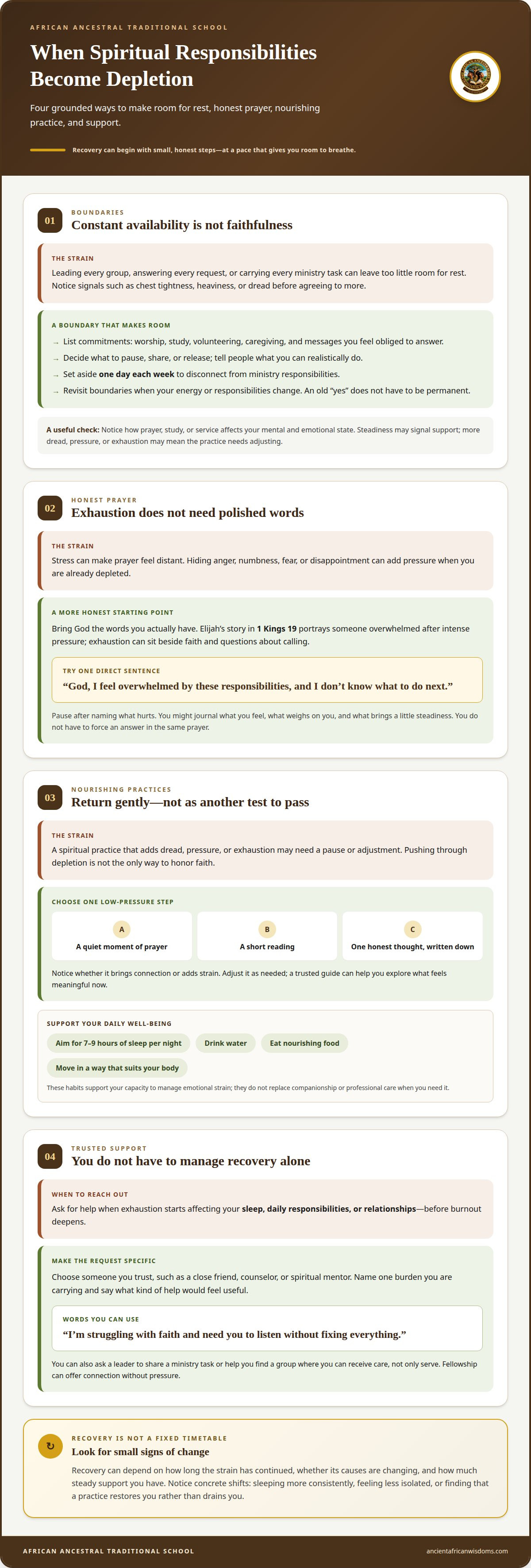
Here are four ways to move toward recovery: set boundaries around spiritual responsibilities, speak honestly with God about your exhaustion, reconnect with practices that feel nourishing, and ask trusted people for help before burnout deepens. Choose what fits your circumstances and begin at a pace that gives you room to breathe.
Key Takeaways
- Review your spiritual commitments and make room for rest before exhaustion becomes harder to carry.
- Choose a simple, nourishing practice that helps you reconnect with your spiritual life at your own pace.
- Bring your tiredness and doubts honestly into prayer instead of feeling you must hide them.
- Tell someone you trust what you’re facing and ask for support before burnout deepens.
1. Setting boundaries around spiritual expectations
Begin by separating devotion from constant availability. Loving God doesn’t require leading every small group, answering every request, or carrying every ministry task. Genesis 2:2-3 presents rest as part of creation, while Luke 5:16 describes Jesus withdrawing to pray. These examples make room for a relationship with God that includes limits.
List your commitments, including worship, study, volunteering, caregiving, and messages you feel obliged to answer. Then ask God for wisdom about what to pause, share, or release. Set aside one day each week to disconnect from ministry responsibilities, and let the people affected know what you can realistically do instead.
Notice when another person’s needs or expectations are becoming yours to carry. Before agreeing to a request, pause and check in with your body. Chest tightness, heaviness, or dread can be a sign to take time to think or give a respectful “no.” Revisit your boundaries when your capacity changes or a new commitment arises.
To tell whether spiritual practices are helping or worsening burnout, notice their effect on your mental and emotional state. A practice that brings steadiness may be supportive, while one that increases dread, pressure, or exhaustion may need adjusting. Track how you feel after prayer, study, or service, and consider the effects on your well-being and daily responsibilities.
To take a healthy break from religious or spiritual practices without guilt, name the pause as a boundary for rest, not a rejection of faith. Choose a manageable way to return when you feel ready. You might step back from organizing a gathering while keeping a quiet moment for reflection. Rest can help preserve your capacity to believe and participate without pushing through depletion.
Review your boundaries regularly. As your energy or responsibilities change, adjust your commitments rather than treating an old “yes” as permanent.
2. So How Can You Heal Spiritual Burnout?
Support can make recovery feel less like something you have to manage alone. One practical step in addressing spiritual burnout and how to recover is to choose a trusted person, such as a close friend, counselor, or spiritual mentor, and name one burden you’re carrying. You might say, “I’m struggling with faith and need you to listen without fixing everything.” You can also ask a leader for practical help, such as sharing a ministry task or finding a group where you can receive care, not only serve.
Can spiritual burnout occur alongside religious trauma or spiritual abuse? Yes, it can coincide with painful experiences such as coercion, control, or betrayal in a religious setting, but burnout alone doesn’t establish what happened. If a relationship or community leaves you afraid to speak freely, consider discussing your experience with a qualified counselor who respects your beliefs and boundaries.
To return to spiritual practices gradually, choose one low-pressure activity that feels safe, such as a quiet moment of prayer, a short reading, or writing down one honest thought. Notice whether it brings connection or adds strain, and adjust it rather than turning it into another test to pass. A trusted guide can help you explore what feels meaningful now.
What self-care habits support recovery? Protect the foundations of daily well-being: aim for 7-9 hours of sleep per night, drink water, eat nourishing food, and include regular movement that suits your body. These habits support your capacity to manage emotional strain; they don’t replace companionship or professional care when you need it.
How long does recovery take? There’s no single timeline. It can depend on how long the strain has continued, whether its causes are changing, and how much steady support you have. As you consider spiritual burnout and how to recover, look for concrete shifts, such as sleeping more consistently, feeling less isolated, or finding that a practice restores you rather than drains you.
Fellowship can offer connection without pressure. Consider asking a trusted friend to check in, or joining a supportive group where people can share burdens honestly. Ecclesiastes 4:9-10 speaks to the strength of having someone beside you; let support become part of healing, not another expectation to meet.
3. Being honest with God about exhaustion
Spiritual exhaustion can make prayer feel distant, especially when stress has worn down your attention and hope. The story of Elijah in 1 Kings 19 offers a picture of someone overwhelmed after intense pressure. He flees into the wilderness, afraid and depleted. His experience makes room for a difficult truth: exhaustion can sit beside faith, even when you’re questioning your calling.
In 1 Kings 19:4, Elijah prays, “I have had enough, Lord…take my life.” His words are raw, not polished. You can bring God the words you actually have, including anger, numbness, fear, or disappointment. Try beginning with one direct sentence: “God, I feel overwhelmed by these responsibilities, and I don’t know what to do next.” Honest prayer doesn’t require you to hide the struggle.
In Elijah’s story, an angel brings him food and rest before God meets him in a gentle whisper. The order matters: Elijah’s immediate exhaustion is met with care, not a lecture about doing better. If your body feels depleted, acknowledge that as part of your experience rather than treating it as proof of spiritual failure.
After naming what hurts, pause and reflect on what you need to say next. You might pray, “I feel alone,” or, “I’m frustrated that this calling feels so heavy.” Then ask, “What are you asking of me now?” Give yourself time to sit with the question; you don’t need to force an answer in the same prayer. Journaling can help you name what you feel, what weighs on you, and what brings a little steadiness. Return to your notes when stress rises, and speak with a trusted spiritual guide if the words feel difficult to carry alone. Like Elijah, you can approach God as you are.
4. Asking for help before burnout worsens
Ask for help when exhaustion starts affecting your sleep, daily responsibilities, or relationships. You don’t have to wait until you’re ill or at an emotional breaking point. Choose someone you trust and make a specific, honest request: “Could you sit with me this week while I explain what’s been weighing on me?” A clear request gives them a way to respond with compassion.
If caregiving leaves you no time to recover, ask a relative or trusted friend to stay with your loved one while you take a short break. You could use that time to attend a gathering, walk outdoors, or rest. If ministry demands keep growing, speak with a leader about sharing responsibilities. Boundaries and practical help can protect both you and the people who depend on you.
Spiritual support should include receiving care, not only giving it. Ask a trusted friend, mentor, or counselor to listen without judgment. Scripture in Galatians 6:2 calls Christians to bear one another’s burdens, and Ecclesiastes 4:9-10 speaks of the strength found in companionship. You’re not alone in needing others. Let a safe person know what you’re feeling, even if you can only name one part of the struggle.
Take urgent distress seriously. In the USA, call 988 for immediate assistance, according to the 988 Suicide & Crisis Lifeline. If you feel at risk of harming yourself, reach out for help now rather than carrying that moment alone. Asking early is a way to care for ourselves before exhaustion deepens.
Choose one step today: tell someone you trust, ask for a specific break, or arrange a conversation with a counselor. If spiritual teachings would help you explore your path with care, explore ancestral spiritual teachings as one possible next step. Let your next choice be small, honest, and grounded in what you can manage.
African Ancestral Traditional School: Courses on African Spirituality, Culture and Tradition
African Ancestral Traditional School offers structured digital courses in African spirituality, culture, and tradition for people seeking to learn about ancestral teachings. When you feel ready to explore spiritual learning after making space for rest and support, the school’s four learning levels offer a structured path, and community access connects students as they learn.
These courses can complement personal recovery by helping you engage with spiritual knowledge at a pace that respects your capacity. Approach learning as an invitation to reflection, not another obligation to fulfill. You can begin when curiosity feels nourishing, and pause when you need room to restore your energy.
When you’re ready to explore the school’s courses and learning levels, visit African Ancestral Traditional School to learn more.
Take the next step at your own pace
Recovery doesn’t need to become another measure of your worth. Choose a next step you can sustain, whether that means keeping a boundary, receiving support, or gently returning to a meaningful practice. Learning about spiritual burnout and how to recover can also create space to explore what gives your spiritual life depth, connection, and belonging.
If African Ancestral Traditional School feels like a fitting place to explore, its learning levels and community access offer ways to engage with ancestral teachings and learn alongside others. Choose a path when curiosity feels welcome, not because you need to prove your devotion.
Contact African Ancestral Traditional School to take a thoughtful next step. Your path can unfold with honesty, care, and room to breathe.
Frequently Asked Questions
So How Can You Heal Spiritual Burnout?
Start by identifying what drains you and what still feels meaningful. For example, if preparing for a weekly gathering now causes dread, step back from organizing and notice whether attending without responsibility feels different. Pair that reflection with practical care and support from someone you trust. Healing isn’t a test of devotion, so let your next spiritual choice reflect your capacity, not pressure.
What Is Burnout, and Where Does It Come From?
Burnout is physical, emotional, and spiritual exhaustion that can develop after prolonged stress. It may arise when demands continue without enough opportunity for rest, recovery, or support. In spiritual settings, pressure to serve constantly, expectations from family or community, and perfectionism can all contribute. Start by identifying which demands have persisted and whether you can reduce or share them.
What is spiritual burnout, and how does it differ from depression or ordinary burnout?
Spiritual burnout describes exhaustion that affects a person’s spiritual life, such as feeling disconnected from beliefs or losing motivation for spiritual activities. Ordinary burnout often involves prolonged demands and reduced energy or satisfaction. Depression can involve broader, persistent changes in mood and daily functioning. These experiences can overlap, so a description alone can’t distinguish them. A qualified health professional can assess what may be happening.
What are common causes and symptoms of spiritual burnout?
Common contributors include taking on too much spiritual work, perfectionism, pressure from loved ones, and little time to process difficult experiences. Signs may include ongoing tiredness, withdrawal from community, loss of motivation, cynicism, or spiritual doubt. Some people also notice changes in sleep or appetite. Write down what has changed in your routines and relationships, then share your observations with someone you trust.
What are practical steps to recover from spiritual burnout?
Choose one manageable change rather than trying to rebuild your entire routine at once. You might ask someone else to lead a gathering, take a quiet walk without turning it into a spiritual task, or read a familiar text for a few minutes. Notice how each choice affects your energy and sense of connection. If a practice adds pressure, adjust it rather than forcing yourself to continue.
When should you seek help from a therapist, doctor, or spiritual leader?
Reach out when exhaustion, hopelessness, sleep changes, or withdrawal persist or interfere with daily life. A doctor can discuss physical symptoms, while a therapist can help you explore emotional distress and its effects. A spiritual leader may offer guidance about beliefs or community pressures if you feel safe speaking openly. If one kind of support doesn’t address the full strain, combining appropriate sources of care may help.


