

A sacred space doesn’t need an altar or even a whole room. To learn how to create a sacred space without an altar, start with a spot where you can pause and feel present, such as a quiet corner, a chair, or a small area beside your bed. Its meaning comes from how you use it, not how much room it takes up.
You may want a place for prayer, meditation, reflection, or stillness, but it can be hard to know what makes a space feel set apart. This guide will help you shape one to suit your home and intentions, whether you have a spare room or only a little floor space. You’ll learn how to choose a location, set boundaries, use meaningful words or objects if you wish, and make the space part of a simple personal practice. Begin with what you have, then let the space grow with you.
Key Takeaways
- Choose a peaceful spot that suits your home; a dedicated room isn’t necessary.
- Let the space’s purpose guide its atmosphere, comfort, and any meaningful items you include.
- Use natural light and fresh air to make your chosen area feel more welcoming.
- Begin simply, set boundaries that support quiet time, and adjust the space as your practice evolves.
Do I need a whole room for a sacred space?
No. A quiet corner, alcove, or small area beside your bed can serve as a place for prayer, meditation, or reflection. Choose a location that suits your practice and allows for as much privacy as your household permits.
-
Choose a Quiet Corner or Alcove
Choose a corner away from the home’s main traffic, such as a bedroom alcove or a quiet spot beside a window. Consider whether household activity regularly interrupts the area. If it does, try another location or agree on quiet times. A chair, floor cushion, or yoga mat can define the space without taking over a room. Keep the setup simple and comfortable to use.
-
Select Meaningful Objects and Photos
Choose objects that connect with your faith, heritage, or intention, such as a loved one’s photo, a stone, a pressed flower, or a meaningful piece of fabric. For example, the Uniting Church in Australia suggests a cross or icon, a Bible, or cloth reflecting the liturgical season. To personalize the space for a different spiritual tradition, include symbols, words, or elements that have meaning within that tradition. Avoid adding items simply because they appear in someone else’s ritual.
- Set boundaries that work for your household. Tell family members which area you use for quiet practice and whether you want it kept private or shared. If you choose a small altar, place it on a stable shelf, nightstand, or desk corner where it won’t obstruct everyday movement. Keeping the surface clear helps distinguish its purpose.
- Choose practices with children and pets in mind. Candles and incense involve flame or smoke, so consider sitting quietly or using an unlit object instead. Keep small objects out of reach, and never leave a candle burning unattended. A simple ritual could be a moment of silence, a spoken intention, or reading a meaningful passage.
Creating spaces for meditation, healing, abundance, love, or protection
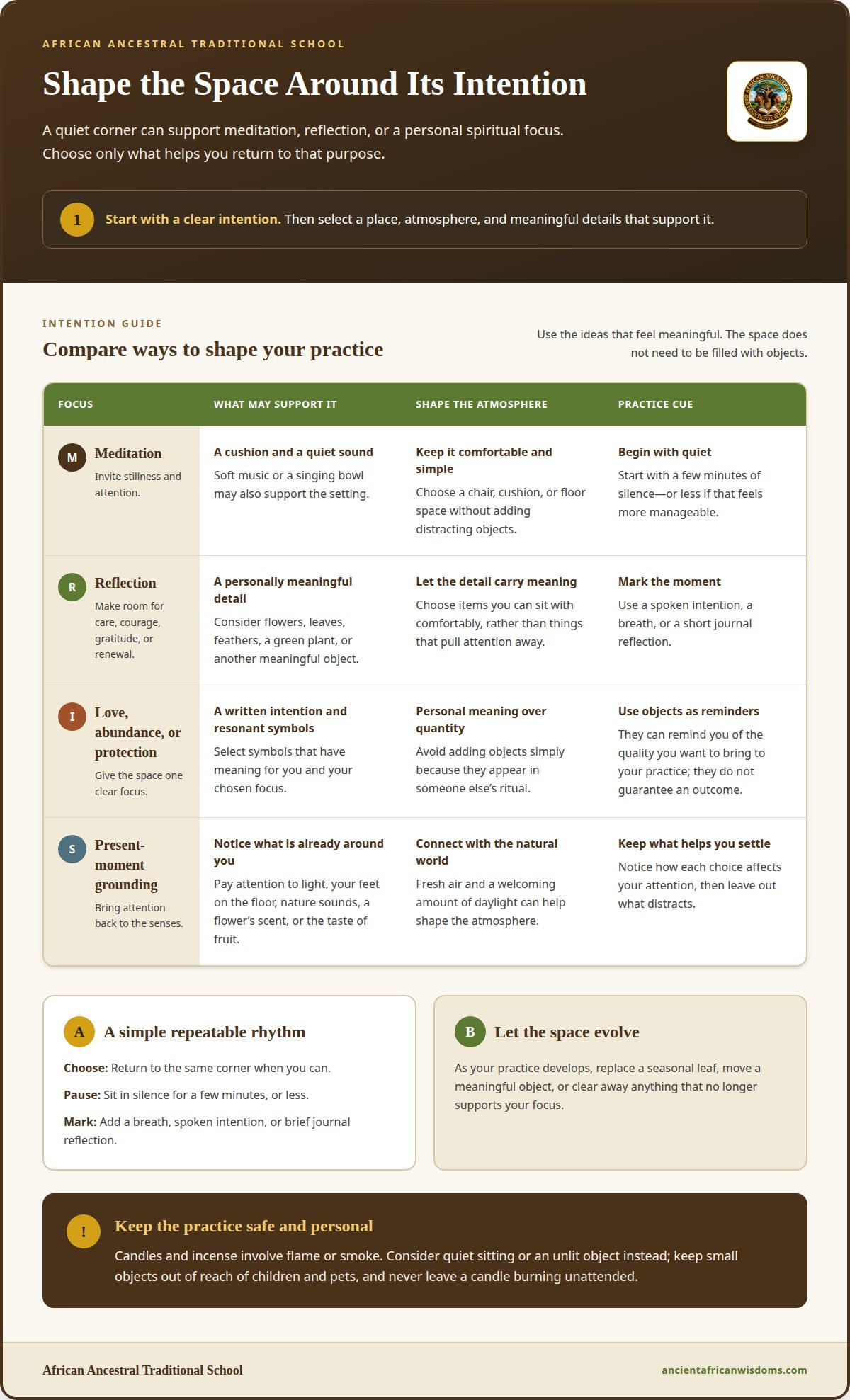
Give the space one clear intention, then arrange it to support that purpose. A meditation corner can invite stillness, while a place for reflection might hold symbols of care, courage, or gratitude.
- Decide on the purpose before arranging anything. For meditation, choose a cushion and a quiet sound; for reflection on renewal, you might select a green plant or a meaningful object. For love, abundance, or protection, write a simple intention and choose symbols that resonate with it. Objects don’t guarantee an outcome; they can remind you of the quality you want to bring to your practice.
- Shape the atmosphere around your spiritual focus. A meditation space might include a cushion, soft music, or a singing bowl. A corner for reflection could feature flowers, leaves, or feathers with personal meaning. Choose items you can sit with comfortably instead of filling the area with objects that distract from your intention.
- Engage your senses to bring your attention to the present. Notice the light, feel your feet on the floor, or listen to nature sounds. The scent of a flower or taste of fruit can also bring your focus back to your body. If you use incense or a candle, make sure it suits your household and practice safely.
- Build a meditation routine that fits your day. Begin with a few minutes of silence, or less if that feels more manageable, then return to the same corner when you can. Regular practice can help the routine feel more natural. Mark the moment with a spoken intention, a breath, or a short journal reflection.
- Let the space change as your practice develops. Replace a seasonal leaf, move a meaningful object, or clear away anything that no longer supports your focus. If you’re exploring how ancestral traditions shape spiritual practice, Ancestral Spiritual Teachings can offer a deeper learning path.
Using natural light and fresh air
Light, fresh air, and contact with the natural world can shape the atmosphere of a home practice. Use these ideas to connect your chosen space with its surroundings.
- Open a window while preparing the space, if one is available. Let fresh air move through before prayer, meditation, or quiet reflection. If the room has no window, an air purifier is one option. Keep the area comfortable for your practice.
- Notice where daylight falls, then place your cushion or chair where the light feels welcoming. A sunlit corner may suit morning reflection, while softer light can make another spot more restful. Observe how sunlight shifts through the seasons, and adjust your arrangement if the space feels too bright or dim.
- Take your practice outdoors if an indoor room feels closed in. A yard, park, waterside path, or place near a large tree can offer a setting for stillness. Sit quietly, listen to birds or moving water, and notice how the air and ground feel. Leave natural places as you found them.
- Use changes in the natural world as prompts for reflection. Notice seasonal shifts, moon phases, and the elements of earth, air, water, and fire. You might keep a small bowl of water nearby or observe a plant’s leaves. Let these details inspire reflection rather than treating them as required rituals.
- Choose sensory details that support your intention. A crystal, fresh flowers, or the scent of incense may help mark a moment for healing, prayer, or contemplation. Perhaps natural sounds are enough. Notice how each choice affects your attention and energy, then keep only what helps you settle into the practice.
- Refresh the space with simple care. Clear away fallen leaves or dust, open a window when appropriate, and move objects that block the light. These small actions connect your indoor setting with the living world outside and keep the space ready for your next quiet moment.
Creating a sacred space without an altar
You can create a sacred space without buying anything or setting up an altar. Begin with a clear intention, a chosen place, and a moment of quiet attention.
-
Use What You Already Have
Choose a place where you can pause, such as a bedroom floor, a chair, or a spot beside a window. Clear away distractions, then sit quietly before placing anything there. A folded blanket can mark a dedicated area, while a familiar view can offer inspiration. The space’s meaning comes from the attention you bring to it, not from new objects.
-
Make the Space Portable
Carry a simple practice with you by choosing one small, meaningful object, such as a smooth stone or a written intention. Keep it in a pocket or bag, then hold it during a quiet moment wherever you are. If you prefer not to use an object, repeat a familiar phrase or take a few steady breaths. This portable practice needs no altar or fixed location.
- Set a clear beginning and ending for your practice. Take a breath, speak a short intention, or read a line of poetry, then sit quietly. When you finish, return the stone or folded blanket to its usual place. These simple actions connect an everyday location with the time you set aside for reflection.
- Mark a boundary in a way that suits the setting. Indoors, a mat or a chair can signal that you’re taking quiet time; outside, plants or stones can define an area. The Federal Bureau of Prisons describes natural barriers, including plants and stone formations, as ways to mark sacred areas. To explore the traditions behind spiritual practice, explore sacred African traditions.
The Federal Bureau of Prisons says, “Low hedges, stone formations, plants, or other natural barriers can mark a sacred area and help prevent people from inadvertently entering it.” It can also help to communicate household expectations and needs.
African Ancestral Traditional School
African Ancestral Traditional School offers a path for readers who want to deepen their understanding of African spirituality, culture, and tradition. Its structured school levels and Ancestral Spiritual Teachings can help you explore the knowledge behind spiritual practice, while Community Access offers a place to connect with others on that learning journey. Spiritual Rituals are also part of its teachings.
Consider continuing your learning if your home practice raises questions about ancestry, tradition, or how spiritual teachings inform personal rituals. Ancient African Wisdoms’ guided courses offer a way to explore African ancestral traditions and cultural heritage as you reflect on your practice.
Explore the online learning path at Ancient African Wisdoms to deepen your understanding of African ancestral traditions.
Let Your Practice Grow With You
Learning how to create a sacred space without an altar can begin a deeper relationship with your spiritual life. Let the space change as your understanding grows, and make room to consider what feels meaningful, what you want to learn, and how your practice connects with your heritage. You don’t need every answer before you begin. A quiet moment of reflection can open the way to continued learning.
If African ancestral traditions are part of the path you want to explore, consider how guided learning and community could support your next steps. Ancient African Wisdoms offers courses in African spirituality, culture, and tradition, helping you explore spiritual practice in its cultural context.
Contact African Ancestral Traditional School to continue your learning. Take the next step in your own time, with curiosity and respect for the path ahead.
Frequently Asked Questions
What is an altar?
An altar is a designated surface or arrangement used for prayer, offerings, remembrance, or ritual, depending on a person’s tradition. It might be a shelf, table, or another stable place holding objects with spiritual meaning. Some people use an altar as a focal point during practice, while others prefer prayer or reflection without arranging objects on a separate surface.
What is the difference between a sacred space and an altar?
A sacred space is a setting or atmosphere someone dedicates to spiritual practice; an altar is a specific arrangement or surface that may sit within it. For example, someone might treat a quiet room as sacred without keeping an altar there. The terms can overlap in some traditions, but they don’t mean exactly the same thing.
What is a sacred space, and can it be created without an altar?
A sacred space is an area or moment set aside for a spiritual purpose, such as prayer, contemplation, or remembrance. Yes, you can create one without an altar: a familiar chair, a quiet walk, or a few minutes of focused reflection can hold meaning. The practice and intention matter more than a particular arrangement.
What items can define a sacred space without an altar?
No special item is required. A meaningful photograph, handwritten prayer, familiar piece of cloth, or plant can help distinguish a place or practice. You might also use a particular song or phrase as a marker, especially in a shared home where permanent objects aren’t practical. Choose items that align with your beliefs, and handle culturally significant objects respectfully.


