

You can feel disconnected from yourself when daily demands make it hard to hear your needs, feelings, and values. Learning how to build a spiritual relationship with yourself starts with noticing those signals, responding with care, and making space for reflection.
It’s natural to want a deeper sense of meaning and inner steadiness, especially when life leaves little room to pause. A spiritual connection with yourself doesn’t require a perfect routine or a particular belief. It can grow through honest self-awareness and small, meaningful acts of care.
Here, you’ll learn to recognize signs of disconnection and explore practical ways to reconnect through meditation, reflection, and practices that feel true to you. Begin gently, listen for what you need, and focus on consistency rather than doing everything at once.
Key Takeaways
- Notice when daily demands make it harder to hear your needs, then meet what you discover with self-acceptance rather than judgment.
- Use meditation to create a quiet pause and observe your thoughts and feelings with greater awareness.
- Choose spiritual practices that feel personally meaningful, so reconnecting can become part of your everyday life.
- Explore how stress, habits, and changing circumstances may contribute to feeling disconnected, and consider what small shift could help you feel more grounded.
1. What Is Spiritual Self-Care?
Spiritual self-care means noticing what matters within you and responding with care. It includes awareness of your needs, emotions, values, and actions, not only prayer or meditation. Try a brief daily check-in: name what you feel, what you need, and one choice that could support you. When you feel disconnected, this pause can help you listen before habit or outside pressure makes the decision for you. Self-acceptance means understanding the reasons behind a choice without treating it as proof that you’re unworthy. You can acknowledge a mistake and still treat yourself with respect.
Psychological safety in personal practice means making room to face an uncomfortable truth without attacking yourself for having it. Spiritual growth allows you to notice pain, take responsibility, and choose a more aligned action. Spiritual bypassing, by contrast, uses spiritual ideas to avoid those realities. Self-criticism also differs from honest reflection: “I hurt someone, and I can apologize” points toward repair, while “I’m a terrible person” turns one action into your whole identity. Journaling or prayer can help you explore the difference without rushing to a tidy answer.
Mindfulness deepens self-connection by helping you notice thoughts and emotions before reacting. Self-compassion adds a kinder response, such as naming a difficult feeling and asking what support you need. Together, these practices help you observe your inner life without judgment and respond with care. Try writing one sentence about a challenging moment and another about what you needed then.
Enjoying your own company can also deepen this connection. Take a quiet walk, prepare a meal without scrolling, or sit with a cup of tea and notice your thoughts. Make the habit sustainable by choosing one small practice you can repeat, such as an evening journal entry or a short prayer. If shame or distress feels difficult to manage alone, share it with someone you trust or seek support through therapy. Accepting help can be an act of self-care, not a failure of spiritual strength.
2. Meditation
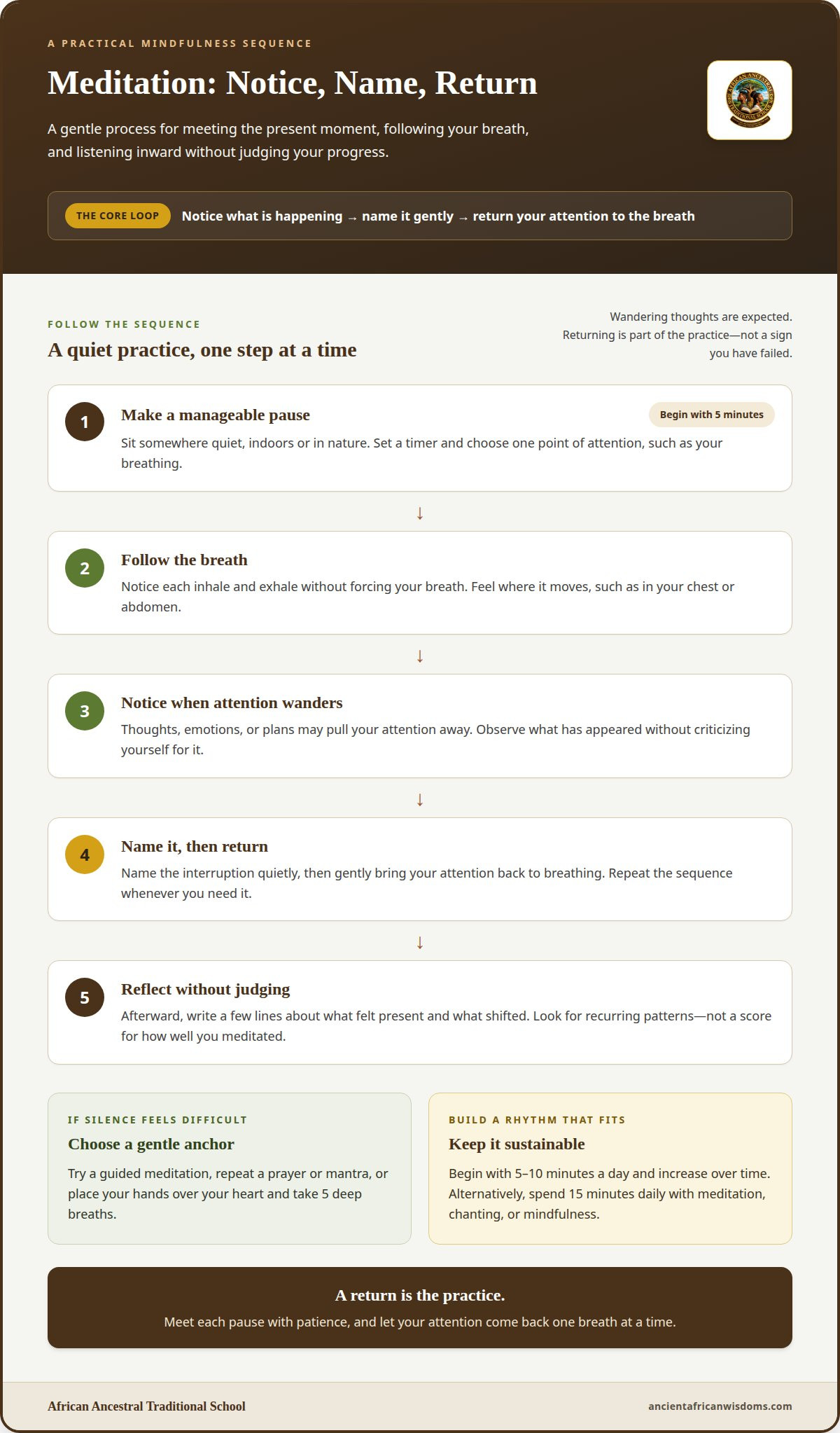
Meditation gives you a deliberate way to meet the present moment rather than follow every thought. Sit somewhere quiet, indoors or in nature, and choose one point of attention, such as your breathing. When your mind wanders, notice and gently return your attention. That return is part of the practice, not a sign that you’ve failed. Over time, observing thoughts this way can help you recognize patterns in how you respond to stress, uncertainty, or stillness.
Begin with a manageable rhythm. Set a timer for 5 minutes and follow each inhale and exhale without forcing your breath. If sitting silently feels difficult, use a guided meditation or repeat a prayer or mantra. You can also place your hands over your heart, take 5 deep breaths, and then ask yourself what deserves your attention today. Let the answer arrive without demanding certainty.
Breath awareness can anchor you when emotions or plans pull your attention away. Notice where you feel each breath, such as the movement of your chest or abdomen. If a thought interrupts, name it quietly, then return to your breathing. This simple sequence, notice, name, return, lets you practise mindfulness during an ordinary pause, not only during formal meditation.
Choose a daily time that fits your life, perhaps before opening messages or after journaling. A short practice can grow gradually; the guidance recommends beginning with 5-10 minutes a day and increasing the duration over time. Alternatively, spend 15 minutes each day with meditation, chanting, or mindfulness to quiet the thinking mind. Afterward, write a few lines about what felt present and what shifted. Use those notes to notice recurring patterns, not to judge your progress. A steady practice helps you listen inward with greater patience and clarity.
3. Choosing personally meaningful practices
A spiritual practice becomes meaningful when it reflects your values and fits your life. Start by writing down three values, such as honesty, family, or creativity. Then choose one daily action that expresses a value: call a relative, make art, or speak truthfully in a difficult conversation. This connects purpose with everyday choices instead of separating spirituality from daily life. A practice should encourage you to live more fully, not become another standard for judging yourself.
Consider your needs before choosing a routine. After a demanding day, you might need quiet; after long hours alone, you might need social connection. Ask yourself what feels nourishing, what feels forced, and what you want more of. A walk in nature, singing, dancing, drumming, or reading spiritual texts can each offer a different path. Notice how you feel afterward: more present, grounded, or aligned with your values?
Yes, you can begin with self-guided exercises that cost nothing, such as journaling, a mindful walk, or a few minutes of reflection. Books such as Bill Plotkin’s Soulcraft and Thomas Moore’s Care of the Soul introduce ideas about sacredness in everyday life. Rather than collecting practices, try one at a time and notice whether it helps you understand yourself more clearly. Keep what feels useful and adapt it to your needs.
Some practices are personal, while others draw meaning from shared experience. An act of kindness, a conversation with someone you trust, or making music with others can nurture connection. You might also create a quiet space at home with an object that reminds you of a value or intention. Keep the practice simple enough to return to, and let your experience guide what stays. A meaningful routine supports you as you are, rather than asking you to imitate someone else’s path.
4. Possible causes of feeling disconnected from yourself
Feeling disconnected can begin when your days leave little room to notice your thoughts, needs, or intentions. A packed schedule, constant screen use, or pressure to meet other people’s expectations can pull your attention outward. You might agree to plans despite feeling reluctant, then wonder why your choices no longer seem like your own. These moments don’t define you; they offer clues about where your time and actions may have drifted from what matters.
Discomfort can also be a signal to pause and listen to your body. Notice what happens when you consider a particular commitment: do your shoulders tighten, or does your breathing change? These sensations don’t automatically explain what’s wrong, but they can prompt a more useful question: what am I feeling, and what do I need before deciding? Write down the situation, your thoughts, and your response. Over time, those notes can reveal patterns worth exploring.
Spiritual disconnection may feel like going through routines without a sense of meaning, avoiding reflection, or feeling unsure about what you value. A personal daily inventory can make these changes easier to recognize. Recall an enjoyable or challenging moment, then name something that made you feel grateful, proud, humbled, or uncomfortable. Reviewing your thoughts and behavior each night can also show where you acted with intention and where you might choose differently.
Try mapping your well-being with a Wellness Wheel: draw 5–8 spokes for areas such as social, creative, physical, or spiritual life. Notice which areas feel neglected, then choose one small adjustment rather than attempting to change everything. If reflection brings up concerns that feel difficult to manage, consider sharing them with someone you trust or a therapist. For a deeper exploration of spiritual disconnection, explore ancestral spiritual perspectives as one way to reflect on meaning, identity, and belonging.
African Ancestral Traditional School: Courses on African Spirituality, Culture and Tradition
African Ancestral Traditional School offers a structured next step when personal reflection leads you to seek deeper cultural and spiritual learning. Its courses on African spirituality, culture, and tradition connect individual exploration with ancestral perspectives. The school’s four learning levels provide a progressive path through its teachings, beginning with Level One, Roots.
Turn to these courses when you want more than an occasional personal practice and are ready to study African spirituality, culture, and tradition in a sustained way. The school’s structured courses explore ancestral teachings, while community access offers a setting to connect with others engaged in learning. These resources complement personal reflection; they don’t replace the care you bring to your own inner life.
If this learning feels like a meaningful next step, contact African Ancestral Traditional School.
Carry Your Reflection Into the Next Step
A deeper relationship with yourself grows through the choices you make after reflection: what you protect, what you nurture, and what you’re ready to learn. You don’t need to force a sudden transformation. Let curiosity guide you, and give each insight room to shape your actions in a way that feels honest and grounded.
If you’re considering how to build a spiritual relationship with yourself, you can also explore traditions that connect personal practice with cultural heritage. Learning within a wider spiritual context may offer new language for questions you’ve been carrying and a stronger sense of continuity as you find your way forward.
When you’re ready to take that step, contact African Ancestral Traditional School. Let your next choice be a thoughtful one, and trust yourself to keep listening as your path unfolds.
Frequently Asked Questions
How do you know if you are disconnected from yourself?
You may notice a gap between what you say you want and what you repeatedly choose. For example, you might accept extra responsibilities while feeling resentful, or struggle to name what you enjoy when someone asks. Look for recurring moments when your preferences seem hard to access. A short note about the situation and your response can help you see whether the pattern appears across work, relationships, or time alone.
What About the Voice in My Head?
Your inner voice may sound like commentary, planning, remembered conversations, or self-judgment. Notice its words and tone, then ask whether it reflects a present concern, an old expectation, or a fear. You don’t have to treat every thought as an instruction. If an experience feels frightening, difficult to manage, or unlike your usual inner speech, talk with a qualified mental health professional for support.
What Is Spiritual Self-Care?
Spiritual self-care means making room for practices that help you feel connected to meaning, values, or a sense of the sacred. It might look like saying a prayer before a difficult conversation, reading a passage that guides your choices, or creating a quiet corner for reflection. The practice can be religious or personal; its value lies in helping you live with greater intention.
What does it mean to be connected to yourself?
Being connected to yourself means recognizing your preferences and letting them inform your decisions. For instance, you might notice that a gathering leaves you energized while another leaves you wanting solitude, then plan accordingly without dismissing either need. Connection doesn’t require certainty about every choice. It means staying curious about your experience and making room for it as life changes.
Why do I feel disconnected from myself?
Disconnection can follow a period when survival, caregiving, conflict, or major change takes most of your attention. A move, a breakup, or a demanding season at work may shift your routines and leave less space for reflection. Consider what changed before the feeling began, and whether it eases in particular settings. That context can help you identify what needs attention first.
What does it mean to build a spiritual relationship with yourself?
It means treating your inner life as worthy of attention and shaping your choices around what you learn. To explore how to build a spiritual relationship with yourself, choose a question that matters, such as “What do I want to stand for in this relationship?” Then look for one action that expresses your answer. Revisit the question as circumstances change so your practice remains responsive rather than fixed.


