

You don’t have to carry every mood or tension you encounter. Learning how to protect your energy from negativity starts with noticing what unsettles you and choosing practices that help you feel present, centered, and connected to yourself.
If certain people, places, or moments leave you feeling drained, it can be hard to name the experience. Meet it with care rather than judgment: pause, listen inward, and create space between what you feel and what you choose to take on.
This guide explores protective visualization, inner connection, crystals, and grounding as gentle ways to respond to unwanted energy. You’ll find practical steps for returning to the present, setting boundaries, and building a steady practice that feels meaningful to you.
Key Takeaways
- Picture a protective boundary around yourself, then use a simple breath or intention to return your attention to the present.
- Notice how you feel and what tends to unsettle you; that awareness can help you respond with steadier boundaries.
- Explore crystals as personal reminders of your intention, while choosing practices that feel meaningful to you.
- Ground yourself through slow breathing, mindful movement, or connection with the natural world, and make the practice part of daily life.
Visualizing a protective shield
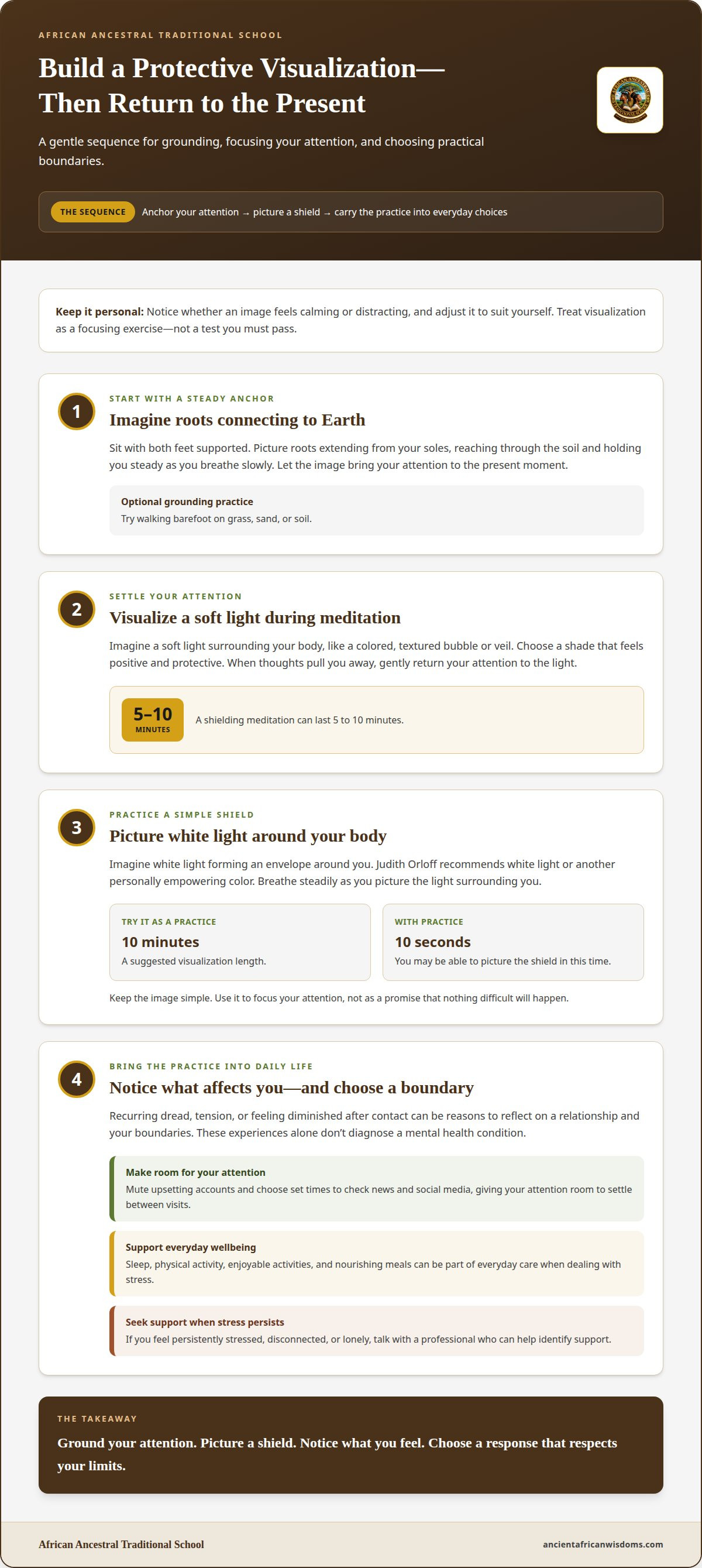
Use visualization as a focused practice: picture a boundary, then return your attention to your breath or surroundings. These steps combine roots, meditation, and white light to help you feel centered.
-
Imagine Roots Connecting to Earth
Sit with both feet supported and picture roots extending from your soles into the Earth. Imagine them reaching through the soil and holding you steady as you breathe slowly. This image gives your attention a clear anchor in the present moment.
Notice whether the image feels calming or distracting, and adjust it to suit yourself. You can also try walking barefoot on grass, sand, or soil as a grounding practice.
-
Visualize Light During Meditation
During meditation, imagine a soft light surrounding your body, like a colored, textured bubble or veil. Choose a shade that feels positive and protective, then bring your attention back to the light whenever thoughts pull you away. A shielding meditation can last 5 to 10 minutes.
To limit exposure to distressing news and social media, mute upsetting accounts and choose set times to check updates. This gives your attention room to settle between visits.
-
Use White Light Visualization
Picture white light forming an envelope around your body, as a protective shield. Judith Orloff recommends white light or another personally empowering color. Try a 10-minute visualization, breathing steadily as you imagine the light surrounding you.
With practice, you may be able to picture the shield in 10 seconds. Keep the image simple, and treat it as a focusing exercise rather than a test you must pass.
- Notice how a relationship affects you. Recurring dread, tension, or feeling diminished after contact can be reasons to reflect on boundaries. These experiences alone don’t diagnose a mental health condition.
Sleep, physical activity, and enjoyable activities can help your body deal with stress, according to the Agency for Toxic Substances and Disease Registry. Include nourishing meals in your everyday care, too.
If you feel persistently stressed, disconnected, or lonely, talk with a professional who can help identify support, as the Centers for Disease Control and Prevention advises.
Connecting with your inner self
Pause before reacting and notice what your feelings and physical responses may be telling you. A few minutes of meditation can help you return your attention to the present and respond with greater intention.
- Settle into a quiet place and begin with a few minutes of meditation. Notice your breathing, then gently return your attention to it whenever thoughts arise. You don’t need to force your mind to become empty. The practice is simply to recognize distraction and come back to one steady point.
For example, if you’re replaying a difficult conversation, silently name the thought, then feel your feet against the floor. This brings your attention back to your body and the moment you’re in.
- Check in with your feelings before deciding what to do next. Ask yourself whether you feel tense, calm, resentful, or at ease, and notice physical signs such as a tight jaw or shallow breathing. Naming what’s present can help you distinguish your own response from pressure to please someone else.
Try recording one feeling and its context in a journal. Over time, these entries can help you notice which situations repeatedly affect your mood.
- Listen to your gut, then consider what it may be responding to. Unease can prompt you to pause, gather context, or set a boundary, rather than prove that another person has harmful intentions. Separate the feeling from the conclusion: “I feel uneasy” is something you can observe; “I know what they intend” is an assumption.
This distinction lets an empath stay open to others while honoring personal limits. Choose a measured next step, such as taking space or asking for clarification.
- Notice when your ego is steering you toward defensiveness, approval, or the need to win. Before answering, take one slow breath and choose a response that reflects your values. Vulnerability doesn’t mean abandoning protection; it means allowing honest feelings while drawing on inner resilience.
After an interaction, reflect on whether your response felt true to you. This simple review can build self-awareness without turning every feeling into a judgment.
Crystals for clearing unwanted energy
In some spiritual practices, crystals serve as reminders of an intention to feel protected or clear. Choose one thoughtfully, and treat its meaning as personal rather than as a proven way to relieve stress or change someone else’s behavior.
- Choose a crystal for the intention you want to hold. Tiger’s eye, black tourmaline, obsidian, and clear quartz are associated with psychic protection in some traditions. Selenite, amethyst, and citrine are also used with the intention of clearing unwanted energy.
Choose one that feels meaningful to you rather than collecting several at once. For example, you might keep amethyst nearby during quiet reflection or carry black tourmaline as a reminder to notice your boundaries.
- Give the crystal a clear role in a specific situation. Before a demanding conversation, hold it and name the response you want to practice, such as listening calmly or speaking honestly. The stone can serve as a physical cue to pause and reconnect with that intention.
Crystals are sometimes described as absorbing unwanted energy, but don’t rely on them to change another person or resolve a difficult relationship. Pair the ritual with practical choices, such as taking space or ending an upsetting conversation.
- Carry a suitable stone if a tangible reminder helps you stay centered. Black tourmaline, black onyx, and amethyst are examples used for this purpose. Keep the practice simple: notice the stone, take a breath, and check what you’re feeling before responding to stress.
After psychic or mediumship work, cleanse the crystal often, as the College of Psychic Studies recommends. Let this be a mindful pause marking the end of the practice, rather than a promise that the stone has removed every unwanted feeling.
- Observe how the ritual affects your attention. If touching clear quartz helps you remember your intention, use it; if a crystal feels distracting, set it aside. A brief note about the stone, situation, and your response can help you decide whether the practice supports you.
Let personal meaning guide your choice, while keeping your boundaries and actions at the center of how you respond to a person or a difficult environment.
Grounding and energy protection
Grounding turns energy protection into practical choices you can use in difficult moments. Start with your breath, then decide which boundary or reset would help.
-
Stay Calm Around Negativity
Slow your breathing and notice the physical support beneath you, such as your feet on the floor. During a tense conversation, focus on one complete breath before replying. You can also try a brief loving-kindness meditation, silently wishing yourself steadiness before responding. These small pauses help you choose your words instead of reacting automatically.
Keep your attention on what’s happening now. If you feel overwhelmed or unfocused, step away briefly for a grounding or centering exercise.
-
Recover After Draining Interactions
After an emotionally draining interaction, pause briefly before moving to your next task. Take a quiet walk, breathe slowly, or sit somewhere peaceful and notice what you’re feeling. A change of setting can mark the end of the conversation and bring your attention back to the present.
Then consider what would support you next: rest, a clear boundary, or a calmer follow-up. Avoid replaying the exchange as your only way to understand it.
- Set a boundary that fits the situation, such as shortening a conversation or taking space from a group. It’s reasonable to step away from an interaction that feels draining, but avoiding every difficult person or situation can limit connection and necessary conversations. Aim for deliberate space, not automatic withdrawal.
If you see someone regularly, choose a manageable change, such as meeting in a calmer place or keeping the conversation focused.
- Set a daily intention to stay grounded and protected, then notice which settings or interactions unsettle you. Keep your physical space orderly and make room for a restorative spot, such as a quiet chair for reflection. Practice outside spiritual work, too, so grounding becomes part of everyday life.
For guidance rooted in spiritual practice, explore Ancestral Spiritual Teachings and consider how they can support a steady grounding routine.
African Ancestral Traditional School
African Ancestral Traditional School offers structured learning for readers who want to deepen their understanding of African spirituality, culture, and tradition. If grounding practices raise questions about spiritual meaning or building a consistent personal practice, its Ancestral Spiritual Teachings and Spiritual Rituals provide a path for continued learning.
African Ancestral Traditional School Levels offer a structured way to explore these teachings, while Community Access provides a space to connect with others on a learning journey. These offerings can help place personal practices within a broader cultural and spiritual context, rather than treating each technique as an isolated exercise.
If you’d like to explore whether this learning path fits your next steps, contact African Ancestral Traditional School.
Carry Your Practice Into Everyday Life
Choose a next step small enough to return to, even on a demanding day. Try one grounding practice and notice what helps you feel present, what leaves you unsettled, and which boundary you want to honor. Over time, this attention can help you respond with greater care instead of absorbing every difficult mood around you.
Learning how to protect your energy from negativity isn’t about shutting out every challenge or person. It’s about staying connected to your values while meeting daily life with awareness. If you’d like to explore these questions through a deeper spiritual learning journey, take the next step when it feels right for you.
Contact African Ancestral Traditional School to continue your exploration. Your practice can grow at a pace that feels grounded, thoughtful, and true to you.
Frequently Asked Questions
What does it mean to protect your energy?
It means noticing what affects your emotional balance and choosing how to respond. For example, after a tense team discussion, separate what needs addressing from feelings tied to the moment. You might write down the specific concern, decide whether action is needed, and then turn your attention to your next task. The aim is mindful self-direction, not shutting out life.
How do I block out negative energy at work?
Reduce avoidable distractions and focus on a clear work priority. For instance, silence nonessential alerts while completing a report, and move a difficult conversation to a suitable time instead of having it in a busy hallway. If workplace behavior is affecting your ability to work, note what happened and use the appropriate workplace process to raise the concern.
How do I stop coworkers from draining my energy?
Focus on specific behaviors and set a practical limit around them. If a coworker repeatedly interrupts, you could say, “I need to finish this task, so I’ll talk after I send it.” Keep conversations focused on work when needed, and take a brief pause between demanding interactions. This addresses conduct without labeling the coworker or assuming their intentions.
What does it mean to protect your energy from negativity?
Learning how to protect your energy from negativity means tending to your attention, emotions, and limits when an interaction feels difficult. Some people understand this through spiritual language, but practical choices still matter. You can decide which conversations deserve a response, what support you need, and when to step away. A protective practice can guide reflection, but it can’t control another person.
How can you set boundaries with negative people?
State your limit calmly and make it specific. You might say, “I can listen for a few minutes, but I can’t discuss this during my work break,” or “I’m ending this conversation if we keep raising our voices.” Then follow through consistently. A boundary describes what you will do, rather than demanding that someone else feel or behave a certain way.
How can mindfulness or meditation help protect emotional energy?
Mindfulness helps you notice a reaction before it takes over your attention. During a challenging exchange, identify what you’re feeling, observe the urge to respond immediately, and choose your next words deliberately. Meditation offers regular space to practice returning your attention when it wanders. Neither practice removes difficult circumstances, but both can help you make room for a considered response.


