

Spiritual grounding doesn’t mean leaving the world behind. It means returning your attention to your body and the present moment. Learning how to ground yourself spiritually can start with noticing your breath, feeling your feet on the floor, or giving a simple act, such as drinking water, your full attention. These practices can help you reconnect when you feel scattered or distant from yourself.
Grounding is more than a thought. It can involve your body, the natural world, and small rituals that help you pause and become present. No single practice suits everyone, so begin gently and notice what feels meaningful to you.
In this guide, you’ll explore how water, body awareness, nature, and crystals can support a sense of reconnection. Each approach offers a practical place to begin, whether you’re at home, outdoors, or seeking a quiet moment in the middle of a busy day.
Key Takeaways
- Use mindful contact with water to bring attention back to your body and the present moment.
- Notice your feet, legs, and points of contact with the ground to feel more settled and present.
- Connect with the natural world in ways that fit your surroundings, whether outdoors or at home.
- Choose a rock or crystal as a tangible focus when you want a quiet moment of reflection.
1. Using water to reconnect with the body
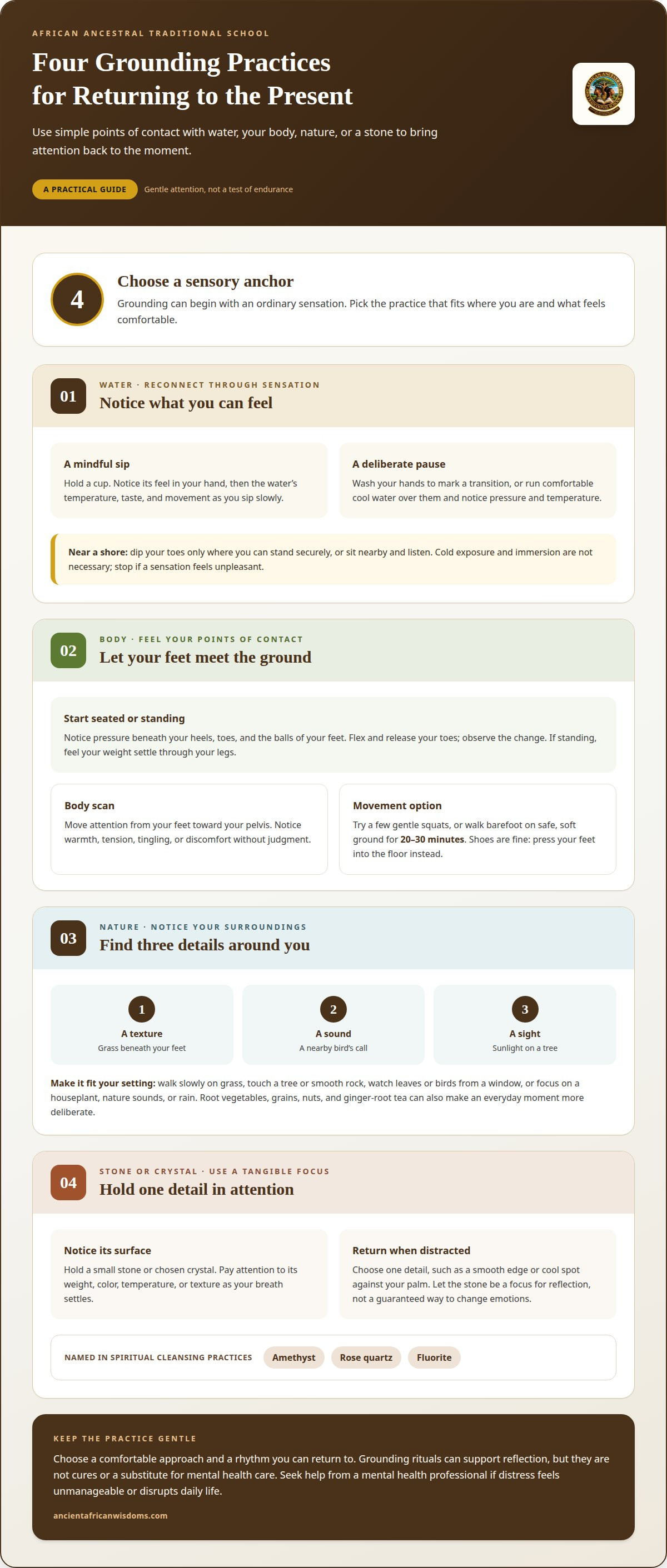
Water can make spiritual grounding tangible. Pause for a drink and notice its temperature, taste, and movement. Take a slow sip, feel the glass in your hand, and bring your attention back to the present. If your emotions feel stirred, wash your hands deliberately to mark a transition after a difficult conversation or reflective practice.
For a simple sensory practice, run cool water over your hands and notice its changing pressure and temperature. You might briefly hold an ice cube wrapped in cloth and focus on its texture as it melts. Cold water isn’t necessary, and this shouldn’t become a test of endurance. Choose a comfortable sensation and stop if it feels unpleasant.
Near an ocean, lake, or river, dip your toes at the water’s edge and notice the contact around your feet. Stay where you can stand securely and keep the practice gentle. Grounding near water doesn’t require swimming or submerging yourself. Sitting beside the shore and listening to the water can also bring your attention back to your senses.
When stress or anxiety rises, take a few slow breaths while holding a cup of water. Name one sensation, such as coolness on your palms, then notice a nearby sound. This gives your attention a concrete point to return to without asking you to push emotions away.
Prayer, journaling, and mindfulness can deepen this pause. Offer a brief prayer, write one sentence about what you feel, or follow each sip with a mindful breath. A favorite cup or familiar handwashing ritual can make the practice personal. Spiritual grounding can support reflection, but it isn’t a substitute for mental health care. Seek help from a mental health professional if distress feels unmanageable or disrupts daily life. Treat water practices as supportive rituals, not cures. Cold exposure and immersion aren’t necessary for spiritual connection.
2. Bringing awareness to the feet and lower body
Begin seated with both feet on the floor. Notice the pressure beneath your heels, toes, and the balls of your feet. Flex your toes, release them, and observe the change in sensation. If you’re standing, gently engage your leg muscles and feel your weight settle. One practical way to learn how to ground yourself spiritually is to notice these ordinary points of contact.
Try a brief body scan, moving your awareness from your feet toward your pelvis. Notice tension, warmth, tingling, or discomfort without judging it. Breathe gently and soften a tense area if that feels comfortable. You can also imagine energy entering through your soles as you inhale and flowing back into the earth as you exhale. Treat this as a visualization, not a literal measurement.
Movement can help make the method tangible. Try a few gentle squats, keeping your feet supported and your range comfortable. Or walk barefoot on safe, soft ground for 20 to 30 minutes, noticing each step. If barefoot walking doesn’t suit you, keep your shoes on and press your feet into the floor. The practice depends on deliberate awareness, not a special setting.
If you’re exploring how to ground yourself spiritually, use a short body scan when you feel disconnected, or make a longer pause part of your routine. Choose a rhythm you can return to easily, rather than a duration that feels like a demand.
Pair a body scan with a quiet prayer or a few written reflections if that helps you stay present. To explore grounding within a broader spiritual tradition, consider ancestral spiritual teachings.
3. Connecting with nature and the earth
Spiritual grounding means bringing your attention back to your body, surroundings, and sense of connection. Earthing usually means direct contact with the ground, such as standing barefoot on soft grass. You can approach both as mindful practices without expecting the earth to resolve difficult emotions. Notice your breath, then name three details: the grass beneath you, a bird’s call, or sunlight on a tree.
Try grounding outdoors by walking slowly across a grassy area. Feel each step, notice the ground’s texture, and pause to listen to nearby sounds. If going barefoot isn’t comfortable, wear shoes and focus on how the path supports your steps. In an urban space, touch a tree, some grass, or a smooth rock. A plant indoors can offer a natural point of attention when you can’t go outside.
Nature can also draw your attention through sight and sound. From a window, watch leaves move or look for nearby birds. Indoors, listen to nature sounds or watch a nature video. Choose one detail, such as rain against a window, and focus on it. This simple act can remind you that the present moment includes more than your thoughts.
Food offers another everyday connection to the earth. Add root vegetables such as carrots, potatoes, or beets to a warm meal, or include grains and nuts. Ginger-root tea is another suggested grounding drink; sip slowly and notice its warmth and flavor. These foods don’t need to carry special meaning. Let preparing and eating them become a deliberate pause.
Animals can offer a gentle focus, too. Watch a bird in a garden or notice a pet settling nearby. Rather than reading a message into its behavior, stay with what you can observe: its movement, sound, and place in its surroundings. Connection grows through attention. Choose a nature practice that fits your setting, then give it a few quiet breaths.
4. Holding and recharging rocks or crystals
A small stone can provide a steady focus during meditation. Hold it in one hand, notice its weight and surface, and let your breath settle naturally. Amethyst, rose quartz, and fluorite are used in spiritual cleansing practices. Their meaning can be personal or symbolic: the stone gives your hands something tangible to focus on when you feel overwhelmed or disconnected.
For a grounding crystal meditation, sit comfortably with both feet on the floor. Hold your chosen crystal and notice its color, temperature, and texture. When your mind wanders, return to one detail, such as a smooth edge or a cool spot against your palm. You might silently name what you want to make space for, then pause for a few breaths. The crystal serves as a focus, not a guaranteed way to change your emotions.
Treat “recharging” a crystal as a meaningful ritual, not a measurable transfer of energy. Place it on a clean, dry cloth, take a quiet moment, and set an intention for your next meditation. To cleanse it as part of your practice, wipe away dust with a soft cloth and reflect on what you’re ready to release. Avoid assuming every crystal responds to the same method. A simple, dry approach keeps the ritual focused without adding unnecessary steps.
Let the practice fit everyday life. Keep a favorite stone beside your journal, or hold it before reading, prayer, or reflection. Notice whether its shape or weight helps you return attention toward the present. If crystals don’t feel meaningful to you, choose another small object, such as a smooth pebble. The grounding comes from the attention you bring to the moment. Explore spiritual practices rooted in ancestral wisdom to deepen your reflection.
African Ancestral Traditional School
African Ancestral Traditional School offers a path for readers who want to explore grounding within African spirituality, culture, and tradition. Its African Ancestral Traditional School Levels and Ancestral Spiritual Teachings provide structured learning, while Community Access offers a way to connect with others exploring this heritage. Spiritual Rituals also form part of the school’s offerings.
If personal grounding practices leave you wanting a deeper cultural or spiritual context, consider continuing your learning through Ancient African Wisdoms. The school’s guided courses explore African worldview, spirituality, culture, and tradition, offering context beyond standalone techniques. Choose the learning path that aligns with your interests and move through the material at a pace that feels right for you.
Contact African Ancestral Traditional School to take the next step in your spiritual learning.
Let Your Practice Grow With You
Let spiritual grounding become a way of listening, not another task to complete perfectly. As you learn how to ground yourself spiritually, notice which practices help you pay attention to your inner life and the world around you. Your needs may shift from day to day, so allow your practice to change with them.
You can also explore how personal reflection connects with inherited spiritual traditions. Ancient African Wisdoms offers structured courses and community access for students exploring African spirituality, culture, and ancestral teachings. Let curiosity guide your next step without rushing toward a single answer.
Contact African Ancestral Traditional School to continue your spiritual learning. Take the next step with patience, and let each moment of attention help you move forward with greater purpose.
Frequently Asked Questions
What is spiritual grounding?
Spiritual grounding is a practice of bringing your attention back to your body, values, and sense of connection. A useful starting point for how to ground yourself spiritually is to choose a small act that reflects your beliefs, such as a brief prayer before a meaningful task. It doesn’t require a particular faith or a perfect state of calm; it invites you to meet the present with awareness.
What does it mean to feel spiritually grounded?
Feeling spiritually grounded can mean noticing your emotions while still having room to choose how you respond. You might pause before answering a tense message, consider what matters to you, and reply with that value in mind. This isn’t constant certainty or an absence of difficulty. It’s a sense of orientation that can help you act with greater intention.
What are simple spiritual grounding techniques for beginners?
To learn how to ground yourself spiritually, start with a familiar daily task and give it your attention. While preparing a meal, notice the ingredients, the sounds in the kitchen, and the movements of your hands. You can also write one sentence about an intention for the day. Choose a practice that feels natural enough to return to regularly.
How can meditation or breathwork help you feel spiritually grounded?
Meditation offers a pause to observe thoughts and intentions without following every distraction. If you’re wondering how to ground yourself spiritually through meditation, sit comfortably and notice the natural movement of your breath. When your attention wanders, return gently to breathing or a meaningful prayer. Keep your breath unforced. The purpose is attentive presence, not achieving a particular rhythm.
What are grounding practices connected to nature or the outdoors?
Choose an outdoor activity that invites observation and care. Tend a garden, pull weeds, or sit near a tree and notice the light, wind, and bird calls. During a walk, observe how the surroundings change between a shaded path and an open space. These practices can strengthen your connection with a place through direct attention, without requiring a special ritual.
What are the differences between spiritual grounding and earthing?
Spiritual grounding is a broad way of becoming present through reflection, belief, or sensory awareness. Earthing generally means direct physical contact with the ground, such as touching soil or standing on grass. Spiritual grounding can happen indoors, while earthing involves contact with the earth. The practices can overlap when someone includes nature in spiritual reflection.


