

Self-care can be a way to reconnect with what grounds you and with your heritage. Spiritual self-care for Black men can begin with simple practices such as prayer, journaling, mindfulness, or quiet reflection, shaped around your beliefs and everyday life.
It makes sense to want care that recognizes the pressures you carry without reducing you to them. Naming what you feel, making room for rest, and connecting with trusted people can support emotional and mental well-being. Movement, sleep, and attentive sexual health also play a part in whole-person care.
This guide offers practical ways to build a personal routine, from gratitude journaling and mindful pauses to reflection on ancestral stories and traditions. Each practice is an invitation, not a test. Begin with what feels meaningful, adapt it over time, and remember that spiritual practices can accompany appropriate healthcare when you need more support.
Key Takeaways
- Notice changes in mood, sleep, or enjoyment, and put words to what you’re experiencing as a first step toward seeking support.
- Try a brief prayer, gratitude note, or quiet moment before reaching for your phone to create space for reflection.
- Use simple mindfulness practices, such as paying attention to your breath, to return your focus to the present.
- Explore ancestral stories and traditions as a meaningful way to connect personal well-being with cultural roots.
Emotional, physical, spiritual, sexual, and mental health
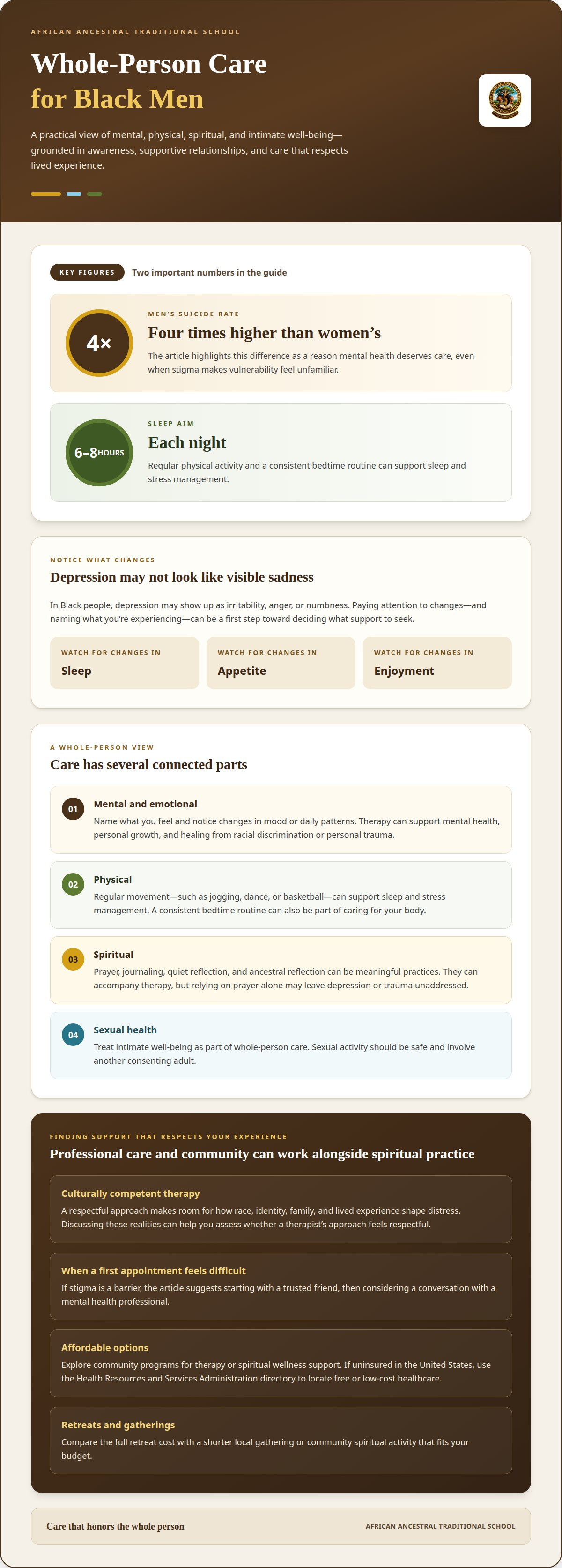
Mental health deserves the same care as physical health, even when stigma makes vulnerability feel unfamiliar. Men’s suicide rate is four times higher than women’s, and depression in Black people may show up as irritability, anger, or numbness rather than visible sadness. Notice changes in sleep, appetite, or enjoyment, and name what you’re experiencing. That honest step can help you decide what support to seek.
Therapy can support mental health, personal growth, and healing from racial discrimination or personal trauma. Culturally competent therapy makes room for the ways race, identity, family, and lived experience shape distress. Discussing these realities can help you assess whether a therapist’s approach feels respectful. If stigma makes a first appointment difficult, start with a trusted friend, then consider speaking with a mental health professional. Spiritual practice can accompany therapy, but relying on prayer alone may leave depression or trauma unaddressed and delay professional care.
Care includes the body and intimate well-being, too. Regular physical activity, such as jogging, dance, or basketball, can support sleep and stress management. Aim for six to eight hours of sleep each night and build a consistent bedtime routine. Sexual activity should be safe and involve another consenting adult. Treat these choices as parts of whole-person care, not separate concerns.
To find affordable therapy or spiritual wellness support, explore community programs. If you’re uninsured in the United States, use the Health Resources and Services Administration directory to locate free or low-cost healthcare. For a retreat, compare the full cost with a shorter local gathering or community spiritual activity that fits your budget. Prayer, journaling, and ancestral reflection can be meaningful parts of spiritual self-care for Black men, while professional care addresses needs those practices may not meet alone.
2. Prayer, journaling, and quiet time
Give the first quiet minutes of your day to yourself, before opening email or social media. Sit comfortably, take a few unhurried breaths, and offer a prayer in your own words. You might name a concern, express gratitude, or ask for steadiness through a difficult conversation. If prayer isn’t part of your practice, sit in silence and notice what thoughts arise. This small pause creates room to choose how you want to enter the day.
Use a journal at the start or end of the day to make reflection specific. Write down what you’re grateful for, such as a meal shared with family, a friend’s support, or a moment of rest. Add a sentence about what felt difficult, then name a next step you can take. If a tense exchange stays on your mind, for example, record what happened and what you want to say differently. The page can help you notice patterns without demanding perfect answers.
These practices don’t require membership in an organized religion. Explore spirituality through quiet time outdoors, reflection on family stories, or a personal ritual that honors your values. You might safely light a candle, speak a blessing before a meal, or write a question about the legacy you want to carry forward. Choose actions that feel sincere, then reflect on their meaning in your journal.
To keep the routine manageable, connect it to something already in your day: write after breakfast, pray before sleep, or sit quietly after arriving home. If you want to learn through African cultural traditions, explore ancestral spiritual teachings as one way to deepen your reflection. Let the practice serve your life, rather than turning it into another task to complete.
3. Mindfulness and meditation
Mindfulness means paying attention to what’s happening now without immediately judging it. Try it during an ordinary transition, such as sitting in your car before entering work. Feel your feet on the floor, notice the seat supporting you, and name nearby sounds. When your thoughts move to a tense meeting or unfinished task, gently return your attention to one sound. This isn’t about forcing your mind to go blank. It’s a way to notice where your attention has gone.
For a simple meditation, sit in a steady position and follow several natural breaths. Notice the air entering and leaving, then observe where your body feels tight. You might notice raised shoulders after a difficult call or a clenched jaw while reading upsetting news. Relax one area if you can, and continue breathing at your own pace. If closing your eyes feels uncomfortable, keep them open and rest your gaze on an object.
Bring mindful attention into movement, too. During a walk, notice each step, the ground beneath your shoes, and the temperature of the air. While washing dishes, feel the warm water and focus on one plate at a time. These everyday moments offer a practical way to return to the present without setting aside a special room or elaborate routine.
Mindfulness can also shape how you listen to friends. During a conversation, put your phone away, notice when you’re preparing a reply, and bring your attention back to their words. Afterward, pause before responding to a stressful message. Ask yourself what you feel and what response reflects your values. Choose a daily cue, such as starting your walk or sitting at your desk, to practise this kind of attention. Adapt each exercise to your comfort, beliefs, and surroundings; a grounded practice should respect your experience.
4. Culturally sensitive self-care for Black men
Culturally sensitive care recognizes that identity, family history, and racism can shape daily stress. After a workplace interaction leaves you feeling guarded, for example, make space to name what happened without minimizing its impact. Spiritual reflection can help you draw meaning from the experience, while trusted relationships offer room to be heard. Ancestral stories and traditions can also offer hope and ways to endure difficult times.
To make care fit your life, identify what feels grounding and what feels alienating. You might prefer a therapist who can discuss racial discrimination directly, a faith community that welcomes honest questions, or a private practice rooted in family customs. Ask yourself whether a space respects your identity, listens without judgment, and lets you define your beliefs. These details can help you recognize culturally responsive support, rather than support that asks you to set important parts of yourself aside.
Spirituality can help Black men cope with racism, stress, and trauma by offering meaning, connection, and practices that honor resilience. It can support reflection, but it doesn’t erase harm or replace mental health care when distress disrupts daily life. To find nearby support groups or wellness programs, look for Black men’s groups at community centers, libraries, or faith communities, and ask about their focus and meeting format.
For books and podcasts, seek creators who address Black men’s well-being, African diasporic traditions, and lived experience with care. Libraries can help locate relevant titles, while community groups may share recommendations shaped by local interests. If you want structured learning about heritage, explore African ancestral spiritual teachings as one path for deepening cultural connection. Choose resources that invite reflection without claiming one tradition or practice fits every Black man.
African Ancestral Traditional School: Courses on African Spirituality, Culture and Tradition
African Ancestral Traditional School offers courses in African spirituality, culture, and tradition for those ready to deepen their understanding of ancestral heritage. Its school levels provide a structured path through ancestral spiritual teachings, while community access creates space to connect with others studying these traditions.
Consider structured learning when personal reflection raises questions about African spirituality, cultural practices, or how ancestral knowledge can inform everyday life. Study can complement prayer, mindfulness, and other personal care practices by offering cultural context to explore at your own pace. It is educational support, not a replacement for mental or physical healthcare when needed.
To continue exploring African spiritual traditions through structured learning, contact African Ancestral Traditional School.
Carry Your Practice Forward
Let your next step be something you can sustain, rather than a standard set by someone else. Choose a practice that feels meaningful, then notice how it fits your daily life and the values you want to carry forward. Spiritual self-care for Black men can grow through steady attention, with room for personal reflection and a deeper connection to heritage.
If you’re ready to explore African traditions through structured learning, African Ancestral Traditional School offers school levels, ancestral spiritual teachings, and community access. These resources can support continued study and connection as you shape your own path.
Contact African Ancestral Traditional School to take a next step in your learning. Keep moving with patience and purpose; your practice can deepen as you give it care.
Frequently Asked Questions
What does spiritual self-care mean for Black men?
It means making space for meaning, identity, and inner life in ways that feel true to you. For one man, that may involve reflecting on family values; for another, exploring ancestral knowledge or setting boundaries that protect his peace. It doesn’t require one religion or a single definition of spirituality. Your beliefs and lived experience shape the practice.
What spiritual practices support Black men's well-being and mental health?
Practices that leave room for personal meaning can include reflecting on an elder’s lesson, reading about African traditions, or sharing a moment of silence with trusted people. You might also mark a transition, such as the end of a workday, with a brief intention. Notice whether a practice helps you feel more connected to your values. If distress persists, spiritual reflection can accompany, but not replace, mental health care.
How can Black men build a daily spiritual self-care routine?
Choose a dependable cue and pair it with a small action. Before beginning work, for example, take a quiet moment to identify the quality you want to bring into the day, such as patience or honesty. Later, consider where that value guided a choice. Keep the routine flexible: if a busy day interrupts it, return at the next natural pause instead of treating the missed moment as failure.
What culturally affirming therapists or spiritual counselors serve Black men?
Look for a therapist who invites discussion of race, culture, faith, and personal history without making assumptions about your experience. In an initial conversation, ask how they approach racial stress and whether they respect spiritual beliefs in care. Spiritual counselors may offer guidance rooted in tradition, but they aren’t a substitute for mental health professionals when clinical support is needed. Choose support that aligns with your needs.
What Black men's support groups, faith communities, or wellness programs are available near me?
Look for Black men’s groups at community centers, libraries, or faith communities, and ask about their focus and meeting format. You can also explore local wellness programs.


