

A steady spiritual practice can fit alongside work, study, and family when you plan around your real priorities. Balancing career and a spiritual practice starts with deciding what matters most, setting aside realistic time, and adjusting your plan as responsibilities change.
Protecting time for inner growth can feel difficult when deadlines, coursework, and family needs compete for your attention. You don’t have to treat every responsibility as equally urgent or measure commitment by the time you spend in practice. A small, consistent rhythm can give your spiritual life a meaningful place in an already full week.
This guide offers practical ways to clarify priorities, recognize progress, plan time for work, study, family, and spiritual practice, and seek support when needed. You’ll also learn to shape a routine that respects your commitments and leaves room for learning and reflection, without expecting every day to go perfectly.
Key Takeaways
- Decide which responsibilities matter most, then make space for spiritual growth around those commitments.
- Notice small signs of progress to see how your practice and daily responsibilities are taking shape.
- Use a planner or digital calendar to give work, study, family, and personal time a realistic place in your week.
- Reach out to trusted people for support, and explore structured spiritual learning and community when you’re ready to deepen your path.
1. Prioritizing spiritual growth, work, family, and education
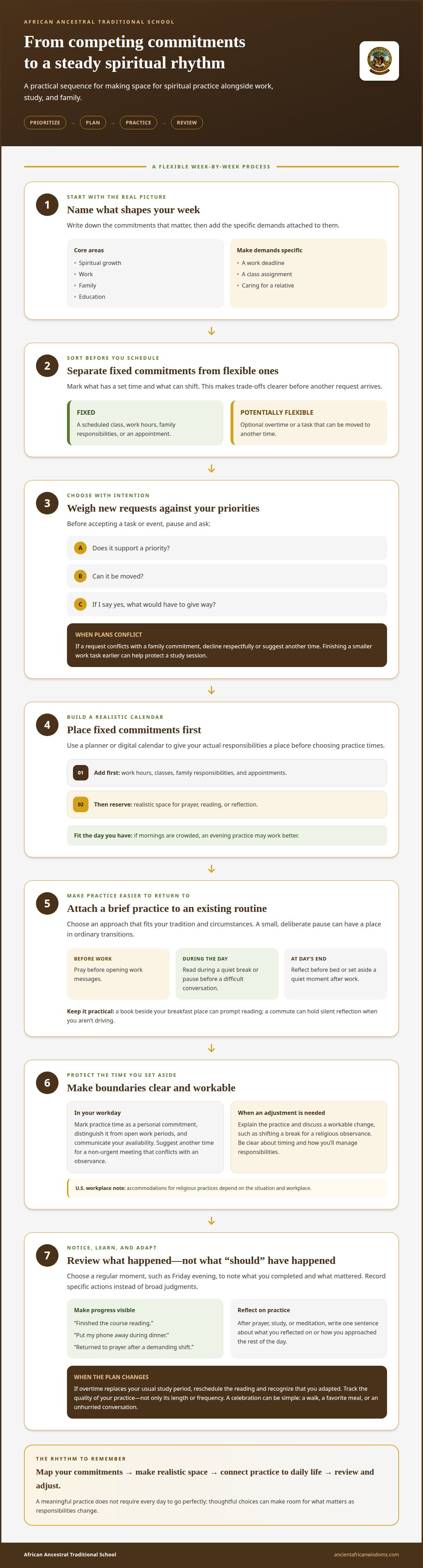
Balancing career and a spiritual practice starts with naming the commitments that shape your week. Write down spiritual growth, work, family, and education, then add specific demands, such as a work deadline, class assignment, or caring for a relative. Mark which commitments have fixed times and which can shift. A scheduled class may be fixed, while optional overtime may be negotiable. This makes trade-offs clearer before a new request arrives.
Spiritual traditions approach work and daily responsibilities in different ways. Some connect spiritual life with prayer, meditation, study, service, or fellowship; others emphasize different practices. Choose an approach that reflects your own tradition and circumstances. If caregiving fills your mornings, for example, you might set aside a quiet moment after work for prayer or reflection.
In the United States, workplace accommodations for religious practices depend on the situation and workplace. Explain the practice and discuss a workable adjustment, such as changing a break time for a religious observance. Be clear about the timing and how you’ll manage your responsibilities. For example, suggest shifting a break rather than leaving a task unfinished.
Prayer or meditation can offer a deliberate pause before a demanding task or after a tense meeting. According to the Centers for Disease Control and Prevention, meditation interventions targeting workers have been found to reduce work-associated stress, depression, and anxiety among full-time Australian workers. That finding concerns those interventions and workers; it is not a promised outcome for everyone.
Before accepting a task or event, consider whether it supports a priority, can be moved, or requires something else to give way. If a request conflicts with a family commitment, decline respectfully or suggest another time. Finishing a smaller work task earlier to protect a study session is one example. Thoughtful choices make balancing career and a spiritual practice more practical as demands change.
Use your priorities to guide how you allocate available time. When a new commitment appears, weigh it against family, work, spiritual growth, and studies instead of treating every request as equally important. If it doesn’t align with what matters most, declining can leave room for the commitments you’ve chosen to protect.
2. Recognizing progress and celebrating small achievements
Progress can be hard to notice when work, study, and family needs change day to day. Choose a regular moment, such as Friday evening, to review what you completed and what mattered. Record specific actions rather than broad judgments. “Finished the course reading” or “put my phone away during dinner” says more than “had a productive week.” This record helps you recognize effort even when plans change.
Include achievements from different parts of life. Completing a challenging assignment is progress, as is spending attentive, quality time with family. You might note that you submitted a paper before its deadline, listened carefully while your child described their day, or returned to prayer after a demanding shift. These examples make progress visible without asking you to rank education, family, work, and spiritual growth.
Track the quality of your practice, not just its length or frequency. After prayer, study, or meditation, write one sentence about what you reflected on or how you approached the rest of the day. For example, note that a quiet pause helped you respond thoughtfully during a difficult conversation. Treat this as personal observation, not a score or proof of spiritual worth.
Mark achievements with a modest, restorative act. After submitting a major assignment, take a walk, prepare a favorite meal, or enjoy an unhurried conversation with someone you love. If a family evening felt meaningful, name what made it so, such as sharing a meal without distractions. Celebration can be a moment of gratitude, not another task to complete.
When a plan falls through, record the adjustment as well as the interruption. If overtime replaces your usual study period, reschedule the reading and recognize that you adapted. A brief reflection on African ancestral wisdom can also help connect everyday learning with a deeper sense of heritage. Let your record show both what you achieved and how you continued.
3. Scheduling work, study, family, and personal activities
For balancing career and a spiritual practice, put fixed commitments into a planner or digital calendar first. Add work hours, classes, family responsibilities, and appointments before choosing practice times. Then reserve realistic space for prayer, reading, or reflection. If mornings are crowded, an evening practice may fit better. A useful schedule reflects your actual day, not an ideal routine.
Daily practices can be simple: pray before opening work messages, read during a quiet break, or reflect before bed. Choose something that fits your schedule and tradition. Keep a book beside your breakfast place, or use a commute for silent reflection when you aren’t driving. Connecting a brief practice to an existing routine can make it easier to maintain.
To protect spiritual time at work, mark it as a personal commitment and distinguish it from open work periods. Communicate clearly about your availability, and suggest another time for a non-urgent meeting that conflicts with an observance. For example, close your laptop at your scheduled finish time and move optional tasks to the next workday.
During the workday, try a quiet pause, brief prayer, or mindful attention to one task. Take a few moments to gather your thoughts before a difficult conversation, or spend lunch walking without work messages. These small practices can bring intention to daily transitions without requiring a separate room or elaborate routine.
To reduce the risk of burnout, schedule recovery alongside career goals and spiritual growth. Leave room for exercise, hobbies, family time, and rest instead of filling every opening with work or coursework. Online education can let you study at your own pace and arrange coursework around existing responsibilities. If a demanding week disrupts your plan, adjust it and return to a manageable rhythm. Balancing career and a spiritual practice over time means building a sustainable routine, not filling every hour.
Make time for self-care, such as exercise, prayer, Bible reading, or hobbies. Treat these activities as part of a sustainable schedule, not rewards to earn after every task is complete. Choose options that suit the time and energy available, and revisit your plan when responsibilities shift. Keeping these activities visible alongside other commitments can help preserve space for personal well-being.
Seeking support from family, friends, colleagues, and church members
Support works best when you make a clear, specific request. Tell a family member which evening you need for coursework or spiritual study, then agree on a practical adjustment. For example, a partner might handle dinner while you attend an online class. A friend could join you for a walk or check in after a demanding workday. Naming the help you need makes it easier for others to respond.
At work, identify a colleague who can help coordinate tasks when a religious observance or family responsibility affects your schedule. Explain what needs coverage and when you’ll return to the task. For example, propose exchanging meeting times or documenting a handoff before stepping away. Keep the conversation focused on practical arrangements and your responsibilities.
Church members or other trusted spiritual companions can offer fellowship, reflection, and encouragement. Share the support that would help, such as attending a gathering together or discussing a passage after a difficult week. You don’t need to share every personal detail. A simple request for company or a listening ear can make spiritual practice feel less isolating.
How can you find local spiritual groups that fit your schedule? Ask trusted friends, family members, or church members about gatherings connected to your tradition. Check community calendars for meeting times, and look for groups with online participation if travel or work hours make in-person attendance difficult.
Before committing, compare a group’s meeting schedule with your work, study, and family calendar. A weekly evening gathering may suit one person, while a monthly weekend circle may fit another. If the schedule doesn’t work, ask whether members share readings or offer another way to participate. Choose a community that supports your practice without making existing responsibilities harder to meet.
To strengthen your connection with African heritage, explore ancestral spiritual teachings and community as part of your ongoing learning. Let trusted relationships support your path, while choosing commitments that respect your time and values.
African Ancestral Traditional School: Courses on African Spirituality, Culture and Tradition
African Ancestral Traditional School offers courses on African spirituality, culture, and tradition for people seeking a deeper connection with African heritage alongside work, study, and family responsibilities. Its structured digital courses and school levels provide a path for learning, while ancestral spiritual teachings explore traditions and practices rooted in ancestral knowledge.
Turn to these teachings when you want more than occasional reflection and are ready to give spiritual learning a clearer place in daily life. Community access lets members connect as they explore cultural heritage. You can approach learning gradually, choosing a rhythm that respects your existing commitments and leaves room for reflection.
If this path speaks to you, explore African Ancestral Traditional School’s courses and teachings.
Carry Your Practice Forward With Intention
Your next step doesn’t need to transform your whole routine. Choose one commitment for the coming week, such as protecting a quiet moment for reflection or making space to learn about your spiritual heritage. Let that choice be a beginning, not another standard you must meet perfectly. As work, study, and family needs shift, your practice can adapt while staying connected to what matters to you.
Balancing career and a spiritual practice is an ongoing process of making room for daily responsibilities and deeper meaning. If you’re ready to explore African ancestral traditions through structured learning, consider what you hope to understand and how learning could fit into your life.
Contact African Ancestral Traditional School to begin a conversation about your next step. Keep moving with patience, and let each thoughtful choice bring you closer to a practice that feels rooted and sustainable.
Frequently Asked Questions
How can I create a realistic weekly routine for work and spiritual practice?
Build your routine around fixed work and family commitments, then choose a practice time that fits your energy. If evening meetings often run late, for example, connect a brief reflection to a dependable transition, such as settling in after your commute. Decide in advance what you’ll do when that moment isn’t available, so one disrupted day doesn’t have to become a missed week.


