
A plant can be more than a remedy; in some traditions, it also carries spiritual meaning. African spiritual herbs for cleansing and healing are used in ways shaped by culture and purpose, from incense and ritual bathing to offerings on sacred altars. There is no universal practice: plants, preparations, and meanings differ across communities.
If you’re drawn to these traditions, it’s natural to want to understand not only which plants are used, but why they matter. This guide explores the relationship between plant spirits and spiritual practice, with examples such as myrrh, rue, and devil’s claw. You’ll learn how preparations can serve cleansing or devotional purposes, how traditions shape their use, and why approaching this knowledge with respect matters.
Key Takeaways
- See how healing traditions differ across African communities, and why cultural context matters when learning about a plant’s use.
- Consider the spiritual role of African wormwood in cleansing and protection without treating every tradition as the same.
- Explore how imphepho can connect ritual cleansing with remembrance of ancestors and inherited practice.
- Learn how structured teachings and community access can deepen your understanding of African spirituality, culture, and tradition.
Traditional medicine practices in selected African countries
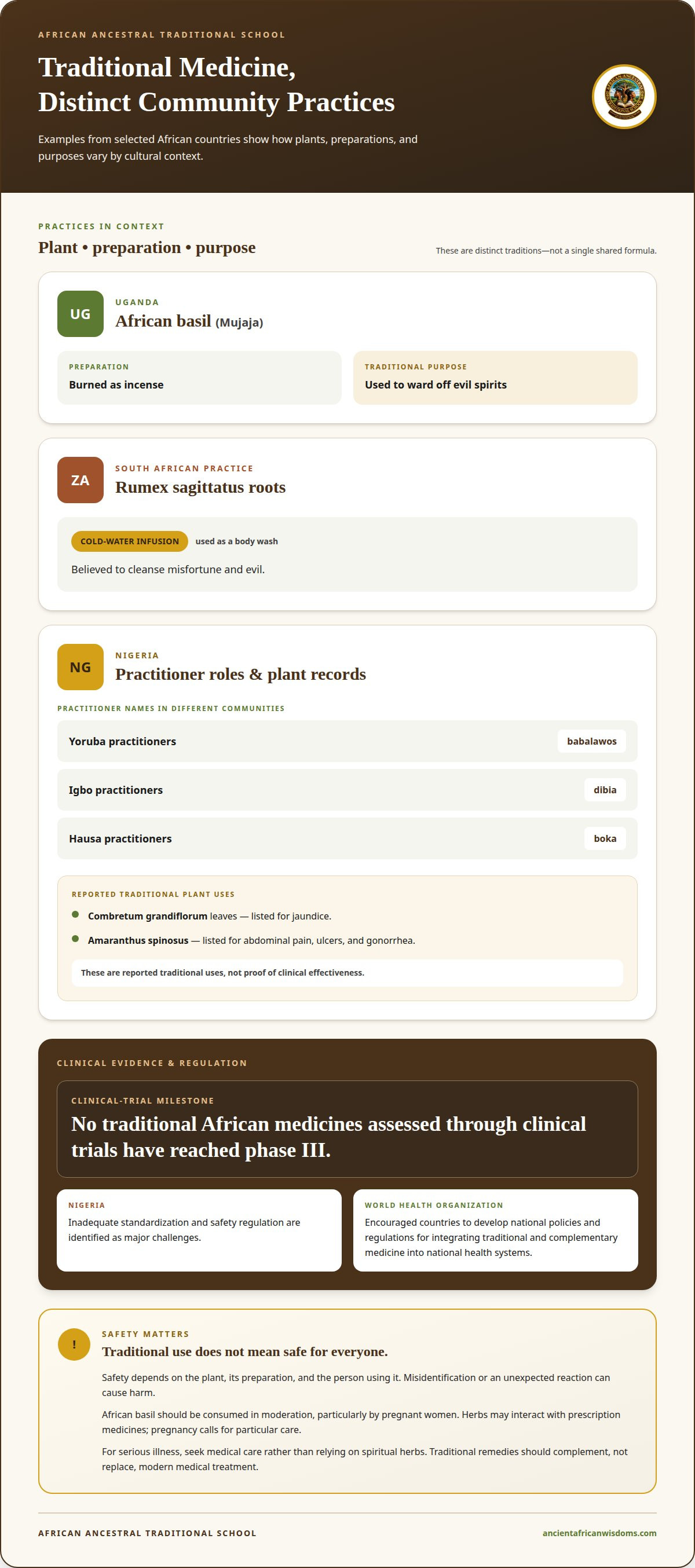
African spiritual herbs for cleansing and healing vary by community and purpose. In Uganda, African basil, also called Mujaja, is traditionally burned as incense to ward off evil spirits. In South African practice, a cold-water infusion of Rumex sagittatus roots is used as a body wash believed to cleanse misfortune and evil. These examples reflect distinct traditions, not one shared formula.
Traditional understandings of illness can encompass social relationships and spiritual life, not only physical symptoms. In Nigeria, Yoruba practitioners are called babalawos, Igbo practitioners dibia, and Hausa practitioners boka. Divination may be one part of a practitioner’s work. These roles and practices reflect knowledge shaped by each community’s culture, beliefs, and environment.
Medicinal plants also appear in records of traditional medicine. A Nigerian medicinal-plant table lists Combretum grandiflorum leaves for jaundice and Amaranthus spinosus for abdominal pain, ulcers, and gonorrhea. These are reported traditional uses, not proof of clinical effectiveness. No traditional African medicines assessed through clinical trials have reached phase III. In Nigeria, inadequate standardization and safety regulation are identified as major challenges. The World Health Organization encouraged countries to develop national policies and regulations for integrating traditional and complementary medicine into national health systems.
Safety depends on the plant, its preparation, and the person using it. Misidentification or an unexpected reaction can cause harm, and traditional use does not establish that a plant is safe for everyone. African basil should be consumed in moderation, particularly by pregnant women. Do not assume herbal preparations are automatically safe because they are native or traditionally used.
Herbs may interact with prescription medicines, and pregnancy calls for particular care. Consult a healthcare provider before using hibiscus tea for chronic blood-pressure conditions. For serious illness, seek medical care rather than relying on spiritual herbs. Traditional remedies should complement, not replace, modern medical treatment.
Why Work With Plant Spirits?
Plant spirits carry meaning within particular cultural practices, not through one universal system. African wormwood, neem, and cramp bark illustrate how cleansing and protection can express different relationships with plants.
Wormwood for Cleansing and Protection
African wormwood’s spiritual meaning belongs within the specific Indigenous traditions that give it that meaning. When the plant is associated with cleansing or protection, its cultural context matters as much as its name. Keeping this in mind helps prevent one interpretation from being applied across different African cultures. Herbal knowledge is carried through context, not simply a plant’s properties.
Neem for Cleansing and Protection
In Ugandan traditions, neem leaves are used in baths as a cleansing practice associated with removing negative energies. The bath’s significance is spiritual, reflecting a belief about cleansing rather than a claim about physical or respiratory treatment. Recognizing that distinction helps readers approach neem with respect for the tradition behind its use, rather than assuming every herbal preparation serves the same purpose.
Cramp bark has a distinct place in Hoodoo practices. Known in this tradition as Devil’s Shoestring, it may be carried for luck and used to protect the home. These uses show how a plant can serve as a meaningful companion or protective presence without being prepared as medicine. The specific practice matters: carrying a root differs from using leaves in a bath or treating a plant as a general remedy.
Working with plant spirits means paying attention to cultural meaning and ritual purpose. Science and spiritual belief address different questions; neither should be presented as proof of the other. Consider who holds the knowledge, how the plant is used, and what protection means within that tradition. This approach honors Indigenous practices while keeping spiritual uses distinct from claims about physical healing.
Imphepho for ritual cleansing and ancestral connection
Imphepho belongs in a discussion of ritual meaning, not a single formula for cleansing. African herbal practices developed across distinct cultures, so a plant’s significance depends on the community and the ritual surrounding it.
Herbs, Rituals, and Ancestral Blessings
Herbs can form part of rituals that connect healing with blessing, remembrance, and the surrounding environment. In Uganda and neighboring countries, healers may bless herbs, patients, and their surroundings as part of a healing ritual. This example shows why a plant cannot be understood apart from the people and practices that give it meaning.
When exploring imphepho, a useful starting point is to distinguish its ritual role from claims about physical effects. A blessing may express respect for ancestors or seek spiritual support; that purpose differs from using herbal remedies for a bodily complaint. This distinction honors inherited knowledge without assuming every community shares the same customs.
Herbal Bathing and Ritual Use
Rue is used as a spiritual purifying herb in bathing rituals in Afro-Brazilian regions. Myrrh offers another example: it has been used as incense since ancient times, including in prayer and rituals intended to bless and purify the spirit. These practices show how preparation, such as bathing or burning incense, shapes the ritual experience.
Wormwood tea, baths, and ritual use are not interchangeable practices. Tea is consumed, a bath involves topical use, and a ritual gains meaning from its cultural setting. Western herbal frameworks may describe plants differently, so avoid assuming that commonly repeated claims explain a community’s spiritual understanding or establish particular effects.
Cultural Origins and Meanings
African herbal cleansing practices arise from diverse cultural knowledge, beliefs, and environments, not one continent-wide tradition. In some Ugandan practices, blessing herbs and the surroundings places the plant within relationships among people, spirit, and place. Imphepho should likewise be understood through the specific tradition that gives its use meaning.
Context matters: a ritual plant is not automatically medicine, and a spiritual practice is not a substitute for medical care. Learn plant names and meanings carefully, and respect that knowledge may be held within particular communities. This offers a more grounded understanding than assigning one universal purpose to every cleansing herb.
Plant preparations for cleansing and spiritual purposes
In traditional African medicine, a plant’s form and ritual setting shape its meaning. Incense, altar offerings, baths, and other preparations can each carry distinct spiritual purposes.
Devil’s claw shows how a plant can hold devotional meaning beyond ordinary preparation. In Yoruba religion and other traditions, it is associated with Orishas who uplift and purify human nature. In Ifá, the plant is sometimes placed on holy altars. These uses frame devil’s claw as part of sacred practice, not simply as a remedy for physical symptoms.
Myrrh offers another example of how preparation shapes purpose. It has served as incense since ancient times and is used in prayer and other rituals to bless and purify the spirit. Burning incense creates a ritual setting, while prayer gives the act devotional intention. The plant’s spiritual meaning rests in how communities use it, not just in its properties.
Other practices involve roots or leaves rather than incense. Whole cramp bark roots are used for spiritual purposes, including helping to conjure spirits. In South African traditional practice, Carduus tenuiflorus appears in a ritual where a patient vomits onto the plant, based on the belief that it will draw out the cause of illness. These are specific traditions, not general instructions for use.
Consider the plant, preparation, and purpose together. A bath, altar placement, or incense ritual can carry a different meaning, even when each involves plants. The source of knowledge matters too: a practice rooted in one community should not be presented as universal African medicine. These distinctions help preserve traditional knowledge and separate spiritual intent from claims about mental or physical treatment.
Explore the cultural roots of African plant rituals to deepen your understanding of their meaning and context.
African Ancestral Traditional School: Courses on African Spirituality, Culture and Tradition
Ancient African Wisdoms offers courses on African spirituality, culture, and tradition for readers ready to deepen their understanding. Explore ancestral spiritual teachings and spiritual rituals through structured learning, rather than treating plant practices as isolated customs.
The Ancient African Wisdoms learning path offers a structured way to continue studying, while community access connects learners as they explore African cultural heritage. This learning can help you place plant knowledge within broader traditions, beliefs, and practices. It is a natural next step if you want to understand the cultural context behind cleansing rituals and ancestral connection.
To continue learning about African spirituality, culture, and tradition, explore the courses at Ancient African Wisdoms.
Carry the Learning Forward
Let curiosity grow into a more grounded relationship with heritage. As you continue learning about African spiritual herbs for cleansing and healing, make room for reflection: What meanings are carried through a practice, and whose knowledge gives it context? These questions can guide respectful study without reducing living traditions to a list of plants or fixed instructions.
Keep learning at a thoughtful pace. Cultural understanding grows through attention to history, community, and the values that shape spiritual practice. Let each new insight deepen your sense of connection while honoring the diversity of African traditions.
If you’re ready to continue exploring ancestral knowledge through structured learning, explore learning with African Ancestral Traditional School. Take the next step with openness and care, allowing what you learn to support a lasting connection to heritage.
Frequently Asked Questions
How are herbs used in traditional African cleansing rituals, and what are the steps?
Traditional cleansing rituals do not follow one shared sequence; their steps depend on the community, plant, and intention. A practice may involve preparing a plant, including it in a ritual, and blessing a person or their surroundings, but these elements are not a universal recipe. Some Ugandan healing traditions include blessings for herbs, patients, and the environment. Learn the meaning before adapting a practice.
Which African herbs are used as baths, washes, incense, teas, or floor cleansers?
Examples include African basil, or Mujaja, burned as incense in Uganda; rue used in Afro-Brazilian bathing rituals; and myrrh used as incense in prayer. Ugandan households steep dried hibiscus petals in hot water for tea, while South African practice describes a cold-water root infusion as a body wash. These examples do not establish floor cleansing as a shared practice or make every preparation medicinal.
What are the differences between African spiritual cleansing traditions across regions and communities?
Practices differ because African communities have distinct histories, beliefs, and relationships with plants. For example, a blessing ritual involving herbs and the surrounding environment differs from a plant-based body wash. The difference is not just the herb: intention, preparation, and community meaning shape the practice. Treating one regional example as representative of all African traditions can obscure that diversity.
Are African spiritual herbs supported by scientific evidence for physical or mental health benefits?
Evidence depends on the specific plant, preparation, and claimed outcome. Traditional use documents cultural practice, but does not by itself establish clinical benefit for physical or mental health. The research summarized here reports that no traditional African medicines assessed through clinical trials have reached phase III. This status limits conclusions about established efficacy; it does not erase cultural significance or prove every plant ineffective.
How can buyers identify authentic, sustainably sourced African herbs and avoid unsafe products?
Look for clear identification of the plant and plant part, such as leaves, roots, or bark, alongside its source and intended preparation. Harvesting information that explains how supply is renewed can help you consider sustainability, since excessive use of medicinal plants can threaten wild populations. Avoid unidentified material, and do not assume traditional use alone guarantees a product’s identity, quality, or safety.


