
What if the persistent feeling of being "unrooted" isn't a personal flaw, but a silent invitation from those who walked the earth long before you? For many in the diaspora, learning how to honor African ancestors is a journey back to a home they've never visited but have always remembered. It's common to feel a deep, aching void where your lineage should be, often accompanied by the fear that improper practice might lead to spiritual repercussions. You might find yourself caught between a profound longing for connection and a confusion about whether you're overstepping sacred boundaries.
You deserve to feel the steadying hand of your lineage in your daily life. This guide will show you how to reclaim your heritage through grounded, time-honored practices that bridge the gap between your modern reality and your ancient roots. We'll explore the vital difference between veneration and worship, provide simple daily rituals for connection, and help you establish a spiritual foundation built on protection and guidance. By the end of this journey, you'll possess the tools to transform your search for identity into a living, breathing relationship with your predecessors.
Key Takeaways
- Recognize ancestral veneration as a continuous, sacred dialogue that forms the essential root of African traditional spirituality and personal identity.
- Understand the flow of Asè, the divine power within your lineage that provides you with the spiritual strength to manifest your purpose.
- Clarify the vital distinction between the act of worship and the practice of veneration, allowing you to honor your predecessors with clarity and peace of mind.
- Learn practical, daily steps on how to honor African ancestors by using your breath and ancestral names to build a consistent spiritual foundation.
- Identify a structured path for growth through tiered learning levels that bridge the gap between curiosity and deep, authentic cultural wisdom.
Understanding the Sacred Practice of Honoring African Ancestors
In many African traditions, the boundary between the physical world and the spiritual realm is a thin, permeable veil. Ancestor veneration isn't a static act of remembering the past; it's a continuous, rhythmic dialogue with those who have transitioned. Understanding how to honor African ancestors begins with recognizing that your lineage is the living root of your spiritual existence. Without these roots, the tree of your life lacks the stability to withstand the storms of modern existence. This practice provides a grounded way to acknowledge that you're never truly walking alone.
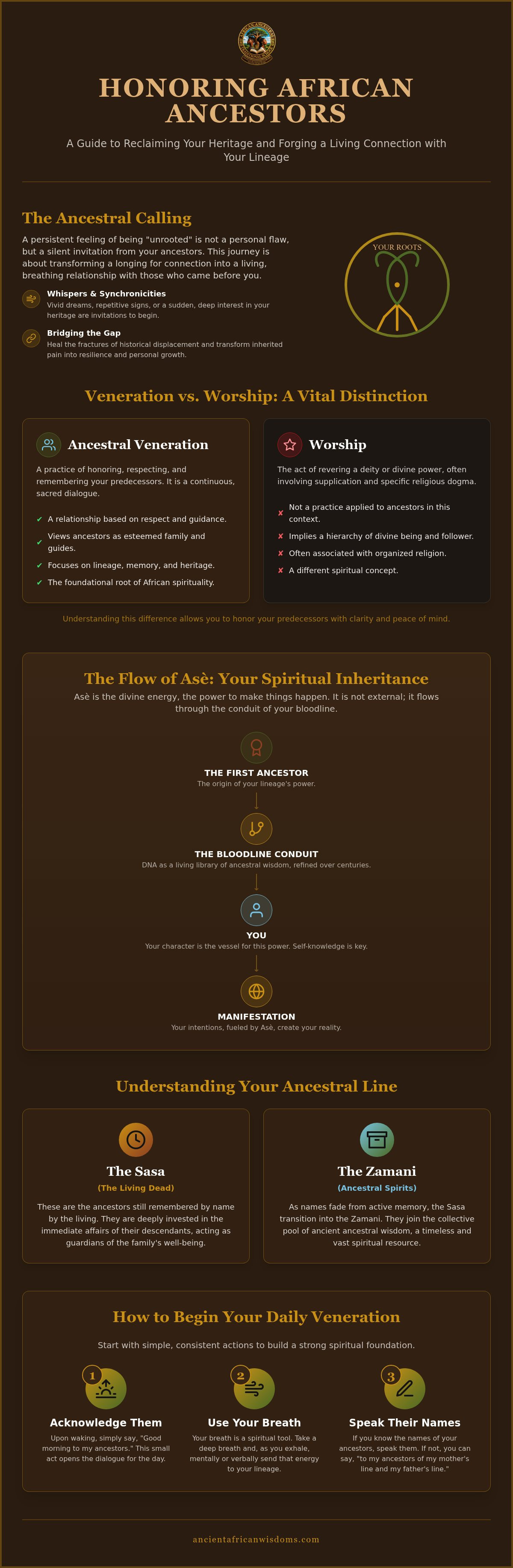
Traditional wisdom often distinguishes between the "Living Dead" (Sasa) and "Ancestral Spirits" (Zamani). The Sasa are those ancestors still remembered by name by the living. They remain deeply invested in the immediate affairs of their descendants, acting as guardians of the family's well-being. As time passes and names eventually fade from active memory, they transition into the Zamani, joining the collective pool of ancient ancestral wisdom. For those in the diaspora, the historical trauma of displacement often feels like a severed connection to these names. However, the blood that flows through your veins carries their essence, making reclamation a process of internal listening rather than just external research.
Why Veneration is Essential for Identity Reclamation
Reclaiming your lineage serves as a profound tool for healing the fractures caused by historical displacement. Your ancestors act as compassionate intermediaries and steady protectors, offering a sense of belonging that the modern world often fails to provide. Engaging with African spirituality allows you to transform inherited pain into a source of personal growth and resilience. It's about moving from a state of isolation into a spiritual community that spans generations, ensuring that your identity is rooted in something timeless and sacred.
The Calling: How You Know Your Ancestors are Reaching Out
You might wonder if you're ready to begin this journey or if you have the "right" to do so. Often, the ancestors reach out through vivid dreams, repetitive synchronicities, or a sudden, unshakeable interest in your heritage. These aren't coincidences; they're invitations to come home to yourself. Answering this call requires a spirit of quiet confidence and warmth rather than fear or hesitation. Seeking structured knowledge is the first step in responding to these whispers. It allows you to build a bridge toward your predecessors with the respect and authenticity they deserve, ensuring you learn how to honor African ancestors in a way that feels both safe and empowering.
The Spiritual Foundation: Lineage, Asè, and Connection
To understand how to honor African ancestors, we must first grasp the concept of Asè. This divine energy is the power to make things happen, the spiritual fuel that allows intentions to manifest in the physical world. It doesn't exist in a vacuum; it flows through the conduit of your bloodline, passed down from the very first parent to you. When you align with your lineage, you aren't just remembering names. You're tapping into a reservoir of spiritual power that has been refined over centuries, ensuring your life is supported by the strength of those who walked before you.
Knowing yourself is the essential first step in this process. You cannot truly know your spirits if you are a stranger to your own heart. Your character acts as the vessel for your spiritual power. If the vessel is cracked or clouded by a lack of self-awareness, the power cannot flow effectively. Engaging with ancestral spiritual teachings helps you clear these internal blockages. These lessons provide a structured way to understand how your unique personality is a direct expression of your predecessors, allowing for a more authentic connection.
Understanding the Bloodline as a Spiritual Conduit
Your DNA is far more than a biological blueprint; it's a living library of ancestral wisdom. Every ancestor who survived, thrived, and learned hard lessons contributes to the spiritual data stored within your very cells. In many traditions, we look toward the Seven Generations concept. This teaching reminds us that we're the result of the seven generations before us, and our actions today shape the seven generations yet to come. Even if you don't know the specific names of your predecessors due to historical displacement, you can still reach them through pure, focused intention. They recognize your spirit even when you're still learning to recognize theirs.
Cultivating Asè Through Daily Recognition
Building your spiritual power isn't about grand, rare gestures; it's about the steady, quiet recognition of the divine in your daily life. You can acknowledge your power through simple acts of gratitude and by maintaining high character, known as Iwa. In West African thought, Iwa Pelé, or gentle character, is the greatest form of spiritual protection. When you live with integrity, your words carry more weight and your prayers reach the ears of the ancestors more clearly. As you explore the teachings of the elders, you'll find that your daily choices are the most powerful rituals you can perform. Asè is the life force that bridges the physical and spiritual worlds.
Ancestor Veneration vs. Worship: Clarifying Traditional Beliefs
One of the most persistent hurdles for those learning how to honor African ancestors is the confusion between veneration and worship. In many Western or Abrahamic frameworks, any spiritual focus on a being other than the Creator is viewed as worship. However, African traditional spirituality operates within a clear, sacred hierarchy. At the summit is the Supreme Creator, the source of all Asè. Beneath the Creator are the various deities or forces of nature, followed by the ancestors, and finally, the living. This structure ensures that everything remains in its proper place, with each level serving a specific purpose in the cosmic order.
Understanding the ancestor veneration vs worship distinction is vital for spiritual clarity. Think of veneration as a profound extension of the respect you show your living parents or elders. You don't worship your grandmother when you seek her advice or keep her photograph on your mantle; you honor her role in your life. Ancestral veneration is simply this same act of respect, continued after the physical body has passed away. It's a way of saying, "I remember you, I value your wisdom, and I acknowledge your continued presence in my life."
The Role of Ancestors as Intermediaries
Ancestors are often described as family members in high places. Because they have lived human lives, they understand our struggles, fears, and triumphs. They act as advocates and intermediaries who can help guide us toward our destiny. We don't ask ancestors to create the world or grant salvation; instead, we ask for their wisdom, protection, and intercession. This relationship carries an ethical weight. As the living representative of your lineage, you have a responsibility to uphold the family name through good character. Your ancestors' reputations in the spirit world are often tied to the integrity you show in the physical world.
Addressing Religious Conflicts and Fear
Many people fear that reclaiming their heritage will conflict with their current religious beliefs. It's common to hear myths that traditional practices involve "evil spirits" or "dark magic." These misconceptions are often rooted in historical biases rather than reality. In truth, learning how to honor African ancestors can coexist with many faith systems when approached with a grounded and respectful perspective. The African Ancestral Traditional School provides a safe, structured environment to explore these truths without the pressure of religious dogma. By focusing on the authenticity of the bloodline, you can find a sense of peace and spiritual safety that reconciles your modern faith with your ancient identity.
Practical Steps to Begin Your Daily Ancestral Veneration
Entering the path of ancestral connection doesn't require elaborate shrines or expensive tools. Many seekers feel overwhelmed, thinking they need decades of training before they can begin. In reality, learning how to honor African ancestors starts with the most basic elements of life: your breath, your intention, and the names of those who came before you. Consistency is the heartbeat of this practice. A simple, five minute daily recognition is far more powerful than a grand ceremony performed once a year. By showing up regularly, you signal to your lineage that you're ready to listen and build a lasting relationship.
Pouring libation is the most fundamental African ritual for maintaining this connection. It's a symbolic act that uses cool water to refresh the spirits and open the way for communication. When you pour water, you aren't just performing a physical task; you're participating in an ancient rhythm that has sustained our people for millennia. It's an invitation for your predecessors to sit with you, offer their wisdom, and provide the spiritual protection you need to navigate your modern life with grace and authority.
Setting Up a Simple Ancestral Space
Create a dedicated area in your home where you can sit in quiet reflection. This doesn't have to be a large area; a small shelf or the top of a dresser works perfectly. For a comprehensive walkthrough on creating this sacred environment, consult our African ancestral altar setup guide. At its most basic, your space should include three core elements:
- A clean white cloth: This represents peace, purity, and the high vibrations of the spirit world.
- A glass of cool, fresh water: Water acts as a medium for spirit and cools the path for your ancestors to reach you.
- A single candle: This symbolizes the light of consciousness and the warmth of your attention.
If you don't have photos or know the specific names of your predecessors, don't let that stop you. You can use symbolic items like a smooth stone from a significant place or a bowl of earth to represent the collective strength of your bloodline. Your intention to connect is the most important tool you possess.
A Simple Daily Libation Ritual
Follow these four steps to begin your daily practice of honoring your lineage. First, ground yourself in the present moment by taking three deep breaths. Second, call the names of those who came before you aloud, starting with the most recently departed. Third, offer cool water by pouring a small amount into a plant or a dedicated bowl. Finally, speak your intentions and ask for guidance. This rhythmic process helps you learn how to honor African ancestors through action rather than just theory. If you feel called to deepen your understanding of these sacred protocols, consider exploring the Ancestral Spiritual Teachings offered through our school levels.
Advancing Your Journey Through Structured Ancestral Education
While beginning your practice at home is a powerful first step, you may eventually feel the need for more structured guidance. Books can provide historical facts, but they often lack the living breath of tradition that only a guided path can offer. The African Ancestral Traditional School serves as a vital bridge, helping you navigate the complexities of how to honor African ancestors with precision, safety, and deep respect. By moving through tiered school levels, you ensure that your spiritual foundation is solid before advancing to more intricate spiritual rituals. This methodical approach protects you from the confusion that often comes with unguided or fragmented exploration.
Digital courses have become the modern way to access these ancient, sacred traditions safely. For many in the diaspora, physical distance and historical displacement have made traditional learning feel out of reach. Our curriculum brings this hidden knowledge directly to you, providing a structured environment for growth that is both disciplined and nurturing. You're invited to explore your heritage at a pace that allows for true internal development, ensuring that every step you take is rooted in authenticity and sacredness.
Moving Beyond the Basics: What the School Offers
The progression through our ancestral spiritual teachings is designed to mirror the traditional path of learning. We move from foundational concepts of lineage to deep, restorative practices that require a higher level of spiritual maturity. This progression is essential to prevent "spiritual bypass," a common pitfall where seekers skip the foundational work of character building and self-discovery to reach for complex rituals. The school acts as a wise, patient mentor, providing a steady hand to help you navigate your own path. You aren't just gaining information; you're undergoing a transformation that honors the weight and timelessness of your heritage.
Joining a Community of Seekers
One of the greatest challenges for those in the diaspora is the sense of spiritual isolation. You shouldn't have to walk this path alone, nor were you ever meant to. When you join our school, you gain community access to a global family of seekers who share your commitment to reclamation. There is a unique power in collective Asè, where the shared intentions and growth of a group amplify the spiritual strength of every individual. This supportive environment provides the spiritual safety needed to explore your roots deeply. Enrolling in your first level of traditional learning is the most effective way to master the protocols of how to honor African ancestors while being held by a community that values your success and well-being.
Embrace Your Lineage and Reclaim Your Strength
Reconnecting with your predecessors is more than a spiritual exercise; it's a profound act of self-restoration. You've explored the sacred flow of Asè through your bloodline and learned the vital distinction between veneration and worship. By establishing a simple daily practice, you transform a sense of historical displacement into a living relationship filled with protection and guidance. Remember that your ancestors are already reaching out. They recognize your spirit and wait only for your intentional response to begin the dialogue that will change your life.
You don't have to navigate this ancient path without a map. Learning how to honor African ancestors is most effective when supported by a structured curriculum and a community that understands your unique journey. Begin your journey today with our African Ancestral Traditional School Levels to access authentic digital courses and join a global network of seekers. Within this safe environment, you'll find the tools to build a spiritual foundation that is both ancient and relevant to your modern life. Your roots are deep, and they're ready to sustain you.
Frequently Asked Questions
Is it dangerous to honor ancestors if I don’t know their names?
It is completely safe to honor your ancestors even if your specific lineage names have been lost to time. Your predecessors recognize your spirit and the blood that flows through your veins, regardless of whether you can recite a genealogy. You can simply address them as "the collective ancestors of my bloodline" or "those who walk with me in light." This practice is about the sincerity of your heart and your desire to learn how to honor African ancestors with respect.
What is the best time of day to perform ancestral veneration?
The early morning hours are traditionally considered the most potent time for ancestral connection. Performing your rituals before the world becomes busy allows you to tap into the fresh, quiet energy of the dawn. However, the most important factor is your consistency. If your schedule only permits an evening practice, the ancestors will value your dedication. Establishing a rhythmic, daily habit creates a reliable bridge between your modern life and the spiritual realm.
Can I honor my ancestors if I am a practicing Christian or Muslim?
You can absolutely honor your ancestors while remaining a dedicated practitioner of your faith. Ancestral veneration is an act of family respect and lineage preservation rather than a form of religious worship. It aligns with the universal principle of honoring your parents and predecessors. Many people find that reclaiming their heritage through our Ancestral Spiritual Teachings actually deepens their personal faith by providing a stronger sense of identity and spiritual foundation.
What should I do if I feel a negative presence when trying to connect?
If you feel an uncomfortable or heavy presence, you should calmly pause your practice and cleanse your physical environment. Use cool water or a simple incense to reset the energy of the room. It's helpful to remember that you have the authority to set boundaries in your own home. Focus your intention specifically on your well-elevated ancestors who wish for your success. Seeking structured guidance through school levels can help you establish a protective and safe spiritual environment.
How much water should I use when pouring libation at home?
You only need a small amount of water to perform a meaningful libation ritual at home. The act is purely symbolic, representing the cooling and refreshing of the ancestral path. A small glass of fresh, cool water poured into a dedicated bowl or a living plant is perfectly sufficient. What matters most is the intention behind the pour and the words of gratitude you speak. This simple gesture is a core part of learning how to honor African ancestors daily.
Do I need to be initiated to start a daily ancestral practice?
You do not need to undergo a formal initiation to begin a daily practice of ancestral veneration. Every person has an inherent, birthright connection to their lineage that doesn't require an external gatekeeper. While deep rituals may require advanced study, the basics of honoring your predecessors are accessible to everyone. Our African Ancestral Traditional School Levels offer a safe, structured way to advance your knowledge and rituals through digital courses without the need for in-person initiation ceremonies.
What are common offerings for African ancestors besides water?
Common offerings beyond water include a white candle for light, fresh flowers, or simple, cool foods like fruit. These items serve as physical tokens of your respect and your desire to nourish the connection with your lineage. It's best to keep your offerings simple and clean as you begin your journey. Avoid using heavy substances or complex items until you have gained a deeper understanding of your specific family protocols through structured ancestral education and community guidance.
How do I know if my ancestors are hearing my prayers and rituals?
You'll often recognize that your ancestors are listening through subtle shifts in your internal state and external environment. You might experience a sudden sense of peace, vivid dreams, or meaningful synchronicities in your daily life. These signs are the ancestors' way of confirming their presence and support. Trust the quiet confidence that grows as you maintain your practice. Over time, this dialogue becomes a steady source of guidance that feels as natural as any other conversation.


