
What if the guidance you've been searching for is already waiting within your own walls, just behind a veil of forgotten history? You likely feel a deep, soulful pull toward your roots, but you might hesitate because you lack a physical mentor or feel disconnected from specific lineage names. This African ancestral altar setup guide is designed to help you overcome the fear of spiritual misalignment as you bridge the gap between modern life and an ancient calling. You aren't alone in this search for a sense of belonging and spiritual safety.
By following these sacred, practical steps, you'll learn how to create a grounded and authentic space for reclamation. We'll show you how to build a living bridge that honors those who came before you, even if their names were lost to time. We'll explore how to select foundational elements like water for clarity and fire for spirit, ensuring your sacred space feels both ancient and relevant. You'll gain a structured way to invite peace and daily guidance into your home, turning a quiet corner into a powerful source of cultural identity and ancestral connection.
Key Takeaways
- Understand how an ancestral altar serves as a sacred bridge for Asè, allowing you to anchor divine power and spiritual connection within your home.
- Use this African ancestral altar setup guide to identify the ideal location for your sacred space and correctly arrange the four essential elemental representations.
- Discover the significance of the white cloth as a symbol of purity and "coolness," creating an environment of peace and spiritual safety for your lineage.
- Learn the specific steps to activate your altar through ritual and establish a consistent rhythm of connection for daily guidance and reflection.
- Recognize your altar as the foundation for a larger journey of reclamation that can be deepened through structured ancestral spiritual teachings and community support.
The Sacred Purpose of an African Ancestral Altar
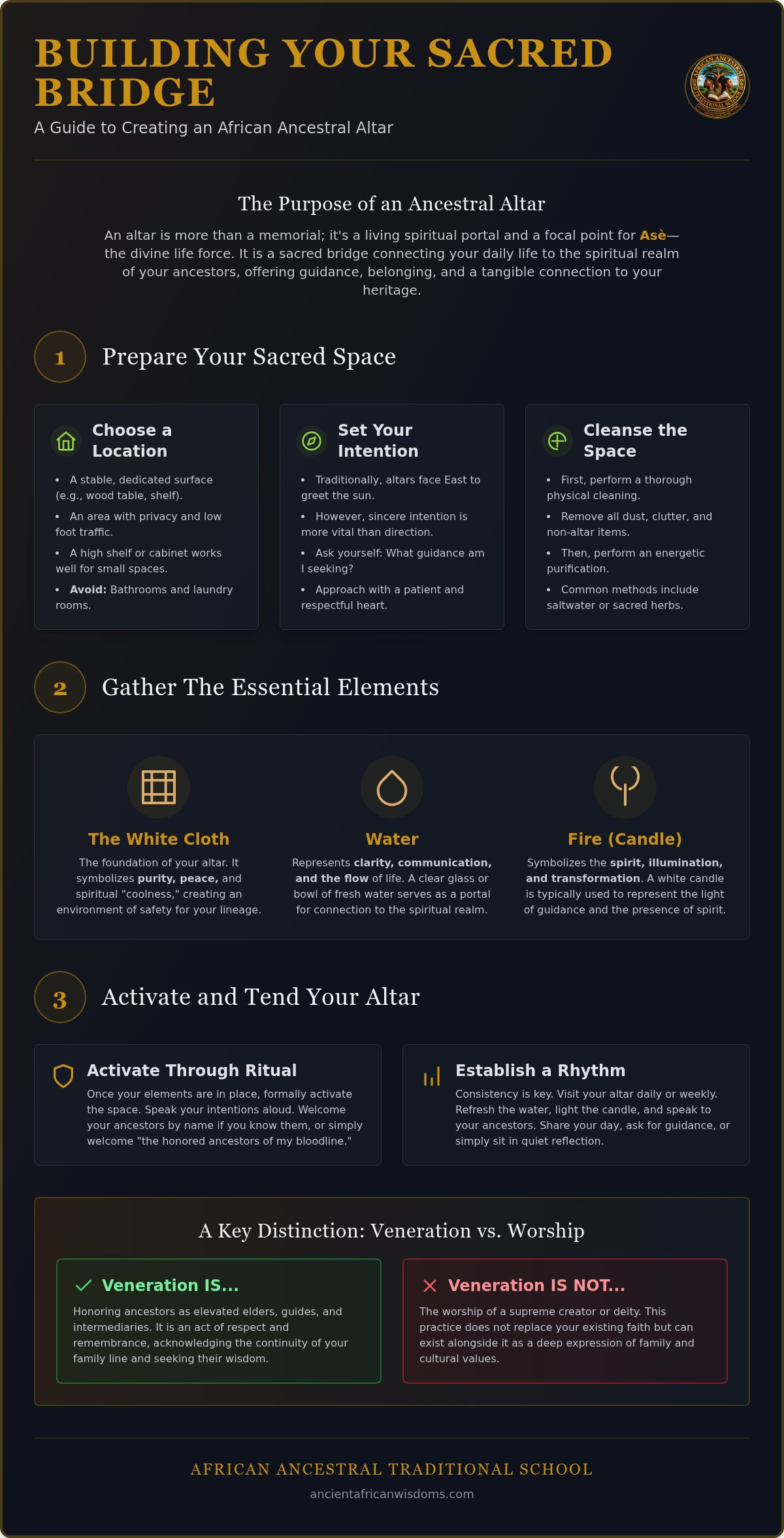
An ancestral altar is far more than a decorative display or a simple memorial for the deceased. It serves as a concentrated focal point for Asè, the divine life force and power that permeates the universe. By dedicating a specific space in your home to your lineage, you create a spiritual portal. This space acts as a bridge between the physical realm you navigate daily and the spiritual realms where your ancestors reside. For many in the diaspora, following an African ancestral altar setup guide is a primary step in reclaiming a spiritual identity that history attempted to erase. It offers a tangible way to ground yourself in a heritage that is both ancient and enduring.
The emotional benefits of this practice are profound. In a world that often feels isolating, the altar provides a consistent sense of belonging. It reminds you that you're the physical manifestation of thousands of lives and victories. This sacred corner becomes a place of quiet protection where you can seek clarity and strength. It's a sanctuary where the noise of the modern world fades, allowing the wisdom of your bloodline to become audible once more.
Understanding Ancestor Veneration vs. Worship
Many people hesitate to start because they fear they might be violating their existing religious beliefs. It's essential to understand that ancestor veneration is not the same as the worship of a supreme creator or deity. In the African worldview, ancestors are honored as elevated elders, intermediaries, and guardians. They're the family members who have transitioned but continue to offer guidance to the living. By honoring them, you're acknowledging the continuity of life. This distinction provides spiritual safety, ensuring your practice remains a respectful extension of your family values rather than a replacement for your faith.
Exploring Your Intentions and Readiness
Building this space requires a grounded and respectful mindset. Ask yourself: What is drawing me to my ancestors at this time? Am I seeking specific guidance, or do I simply want to honor my roots? You don't need to have a perfect family history or know every name in your lineage to begin. Your DNA holds the vibrations of those who came before you, even if their names were lost to the archives of history. Approach this journey with a patient heart. The goal is to create a rhythm of connection that feels natural and sustainable. When you start with clear intentions, the altar becomes a powerful tool for your personal and spiritual development.
Choosing and Preparing Your Sacred Space
Selecting the physical foundation for your altar is a deliberate act of intention. You aren't just picking a corner; you're designating a permanent residence for spiritual presence. A stable, flat surface is essential. Many practitioners prefer a wooden table or a sturdy shelf, as wood is a living material used in ancestral veneration that maintains a connection to the earth. This stability reflects the reliability you seek from your ancestors. Ensure the surface is dedicated solely to this purpose rather than serving as a temporary catch-all for household items.
In most traditions, certain areas of the home are considered unsuitable for this sacred work. Bathrooms and laundry rooms are generally avoided because they're spaces of waste and heavy cleansing. You want an environment that feels "cool" and settled. This African ancestral altar setup guide emphasizes that the energetic quality of the room matters as much as the furniture. By placing your altar in a respectful area, you establish the concept of spiritual grounding, creating a solid base where your family's Asè can flourish without disturbance.
Finding the Right Location in Your Home
Look for a spot that offers a balance of accessibility and privacy. You want to be able to interact with your ancestors daily without having to navigate through high-traffic chaos. If you live in a small or shared apartment, a high shelf or even a small cabinet with doors can work beautifully. This allows you to close the space when guests are present, maintaining its sanctity. Some traditions suggest facing the altar toward the East to greet the rising sun, symbolizing new beginnings and the constant cycle of life. If your home's layout doesn't allow for this, don't worry. The sincerity of your heart and the consistency of your presence are what truly matter.
Spiritual Cleansing of the Physical Space
Before you place a single item on your altar, you must prepare the environment. Start with a thorough physical cleaning to remove dust and clutter. Once the area is tidy, move on to an energetic purification. You can use a simple mixture of saltwater to wipe down the surface, as salt is a traditional neutralizer of stagnant energy. Some practitioners use aromatic herbs like hyssop or sage to smoke-cleanse the air. As you do this, speak your intentions aloud. You're setting a boundary, declaring this specific area a sanctuary for your lineage. This process ensures that the space is "bright" and welcoming for the spirits you're inviting in. To deepen your understanding of these foundational steps, consider browsing the African culture courses that provide a structured path for your journey.
Essential Elements for Your African Ancestral Altar Setup
Once your space is physically and energetically prepared, you can begin the sacred assembly of your altar. The first layer is traditionally a clean, white cloth. This isn't merely a covering; it represents the "coolness" and purity required to approach the ancestral realm. In many African traditions, white symbolizes a settled spirit and a clear mind. It sets a high-vibrational frequency for the space, ensuring that the energy remains peaceful and welcoming. This African ancestral altar setup guide prioritizes the spiritual weight of your items over their commercial value, so don't feel pressured to buy expensive tools.
A simple glass of fresh, cool water serves as the most critical portal on your altar. Water is the universal conduit for spiritual communication. It provides clarity and acts as a mirror between the worlds. You should change this water regularly to keep the connection "bright" and flowing. By placing this glass at the center of your space, you're inviting your ancestors to sit, drink, and commune with you in a clear, undisturbed environment.
The Four Elemental Representations
To create a balanced environment, you must represent the four fundamental elements. These elements anchor the spirit into the physical world, making the connection more tangible. You can find these items in nature or around your home:
- Water: The central glass of water for communication and spiritual refreshment.
- Earth: A small bowl of soil, a potted plant, or a collection of stones to ground the energy of your lineage.
- Fire: A white candle to provide light and warmth, acting as a beacon for the spirits of your ancestors.
- Air: Incense or a simple feather to carry your prayers and intentions upward into the spiritual atmosphere.
Personal Mementos and Lineage Symbols
As you build your altar, include items that reflect the joys and values of your known ancestors. A favorite piece of jewelry, a specific tool they used, or a photograph can act as a powerful anchor for their specific energy. If you have photographs, place them with respect, ensuring they're separate from images of the living. Focus on ancestors who lived well and left a positive legacy, as these are the elevated spirits you want to invite into your daily life.
For those in the diaspora who feel the pain of lost names or missing records, remember that your blood carries the memory your mind might lack. You can use "placeholders" for unknown ancestors. A beautiful, sturdy stone found in nature or a generic representation of a man or woman can serve as a seat for those whose names have been forgotten by time but are remembered by spirit. Avoid using items associated with trauma or the end of life. Your altar is a place for the living spirit, not a shrine to death. By focusing on life and continuity, you ensure the space remains a sanctuary of protection and wisdom.
Activating and Tending Your Altar
Setting up the physical items is only the first part of the journey. To truly bring the space to life, you must perform an activation ritual. This process transforms a collection of objects into a living sanctuary. The most foundational act in this African ancestral altar setup guide is the pouring of libations. By pouring a small amount of fresh water into a bowl or onto the earth, you're offering nourishment and respect. This simple yet profound gesture signals your readiness to communicate and establishes a rhythmic exchange of energy between you and your lineage.
Consistency is the heartbeat of ancestral work. It's better to spend five minutes at your altar every day than an hour once a month. This regular interaction builds trust and strengthens the bridge you've created. As you tend to the space, you're essentially tending to the relationship with your ancestors. You'll find that as you maintain the physical cleanliness of the altar, your own internal clarity begins to sharpen and your sense of purpose deepens.
Your First Invocation and Greeting
Begin by lighting your white candle. As the flame flickers, take a few deep breaths to center your spirit. This is your formal introduction. Speak aloud, even if it feels unfamiliar at first. You might say: "I honor the elevated spirits of my bloodline. I am [Your Name], child of [Parent's Name], and I open this space to receive your wisdom and protection." You don't need a complex script; sincerity is the most important element. After you speak, sit in silence for a few moments. Pay attention to quiet nudges of intuition or sudden shifts in your emotional state. These are often the first subtle signs of connection responding to your call.
Daily Practices for Consistent Connection
Your daily routine should include changing the water in your central glass. This keeps the portal bright and prevents stagnant energy from settling in your sacred space. While you're there, wipe away any dust and ensure the white cloth remains clean. You can also explore African ancestral rituals online to find structured ways to deepen your practice. Use this time to share your gratitude, ask for guidance on specific challenges, or simply reflect on your day. This consistent rhythm turns a quiet corner into a source of enduring strength. To move beyond the basics and master these traditions, consider enrolling in our ancestral spiritual teachings for deeper mentorship and community support.
Deepening Your Connection Through Structured Learning
While this African ancestral altar setup guide provides the physical foundation for your practice, remember that the altar itself is a beginning, not a final destination. It's the sacred gateway through which you'll begin to communicate with your lineage. However, to truly reclaim an identity that has been obscured for generations, you must pair your daily rituals with deep, intentional study. By seeing yourself as a student of your own heritage, you transform your spiritual practice from a series of tasks into a lifelong journey of restoration. This shift in perspective ensures that your connection remains grounded in truth rather than just personal imagination.
Reclaiming your roots requires more than just intuition; it demands a structured approach to the ancient knowledge systems of your ancestors. By moving through tiered learning levels, you can organize your growth and avoid the feeling of being overwhelmed by the vastness of African tradition. This methodical path allows you to build a solid foundation of understanding, ensuring that every prayer you whisper and every libation you pour is backed by the weight of authentic tradition.
Beyond the Altar: The Role of Ancestral Education
Understanding the "why" behind your actions brings a new level of power to your rituals. When you study African cosmology and philosophy, you begin to see the intricate web of connection that links the living, the transitioned, and the unborn. This knowledge provides the necessary context for ancestral veneration for the African diaspora, moving beyond simple memory into a structured system of spiritual reclamation. Study is, in itself, a profound form of honor. When you dedicate time to learning the truths of your ancestors, you're telling them that their history matters enough to be mastered and preserved.
Joining a Community of Seekers
Reclaiming your heritage can often feel like a lonely endeavor, especially when you're the first in your family to return to these ancient ways. Joining an African ancestral traditional school offers more than just information; it provides a global family of seekers who share your commitment. Digital community access allows you to share ritual insights and experiences, ensuring you never have to navigate this path in isolation. This community acts as a protective circle, offering a safe environment for you to grow, ask questions, and refine your practice. We invite you to explore our school’s levels and take the next step in your spiritual education, moving from the setup of your physical space to the mastery of your soul's history.
Your Path of Spiritual Reclamation Begins Here
Creating your sacred space is the first intentional step toward healing the fractures of the past. By following this African ancestral altar setup guide, you've moved from a place of disconnection to one of purposeful presence. You now understand that the altar isn't just a physical table; it's a living bridge maintained through the rhythm of libations and sincere invocation. You've prepared the ground; now it's time to cultivate the seeds of ancient knowledge through deeper study and reflection.
True reclamation flourishes when paired with authentic ancestral spiritual teachings and the support of those who walk the same path. We invite you to Begin your journey with our structured African Ancestral Education Programs. You'll gain access to our global community of students and benefit from tiered learning levels designed for every stage of your journey. These resources provide the structured environment you need to move from a beginner's setup to a lifetime of spiritual mastery. Your ancestors are waiting for you to take this next step. Trust in the process, stay consistent, and know that you're never walking this road alone.
Frequently Asked Questions
What if I don't know the names of my ancestors?
You don't need to know every name in your lineage to begin this practice. Your blood carries the memory of those who came before you even if the historical records are missing. You can use a placeholder such as a sturdy stone or a simple representation of a man or woman. Address them collectively as your unknown ancestors. They'll recognize your intention and respond to the sincerity of your heart.
Can I set up an altar if I am a Christian or Muslim?
You can absolutely maintain an altar while practicing your faith as a Christian or Muslim. Ancestor veneration is a cultural and spiritual way of honoring your lineage rather than a form of deity worship. It serves as an extension of the respect you show your living elders. Many people find that connecting with their ancestors actually deepens their existing spiritual life by providing a clearer sense of purpose and identity.
Where is the best place to put an ancestral altar in a small apartment?
In a small apartment, the best location is a quiet corner or a sturdy shelf that isn't in a high-traffic area. Avoid placing your altar in the bathroom or laundry room as these are spaces of waste. A high shelf or a small cabinet with doors works well because it allows you to keep the space sacred and private. The stability of the surface is more important than the size of the room.
How often should I change the water on my altar?
You should change the water on your altar every day. Fresh water acts as the primary conduit for spiritual communication and keeps the connection "bright" and clear. When you change the water, you're performing a simple yet profound act of service that shows respect to your ancestors. This daily rhythm helps you maintain a consistent energetic flow and prevents stagnant energy from settling in your sacred sanctuary.
What should I do if I feel afraid or uncomfortable when starting?
It's natural to feel some hesitation when you're reclaiming a practice that was once hidden. Start slowly by simply placing a glass of water and a white candle in your chosen space. Focus on the fact that your ancestors are your family and they want to see you thrive. This African ancestral altar setup guide encourages you to use structured learning to replace fear with the quiet confidence of ancient wisdom.
Can I include photos of people who are still living on the altar?
You should not include photos of the living on your ancestral altar. This space is specifically dedicated to those who have transitioned and are now acting as elevated guardians. Mixing the energy of the living with the dead can create spiritual confusion. It's best to have a separate area in your home for family photos of living relatives to ensure the altar remains a focused portal for ancestral connection.
What are the most common mistakes when setting up an African ancestral altar?
The most common mistakes include lack of consistency and over-commercializing the space with unnecessary items. You don't need expensive statues to be successful. Another error is neglecting the physical cleanliness of the altar or placing it in a cluttered area. This African ancestral altar setup guide emphasizes that the sincerity of your intention and a "cool," clean environment are the true foundations for a powerful and authentic connection.
Do I need to be initiated into a specific tradition to have an altar?
No, you do not need to be initiated into a specific tradition to set up a personal altar. Veneration is a birthright available to everyone in the diaspora. While an altar is a foundational tool, you can deepen your journey through the African Ancestral Traditional School. Our digital courses provide structured curriculum and community access for those who want to master ancestral spiritual teachings without needing in-person ceremonies or personalized readings.


