
Across Africa, about 80% of the population uses traditional herbal medicine for healthcare. African Herbalism is part of Traditional African Medicine, a broad body of healing knowledge that can include plant remedies, spiritual practices, and care rooted in community and tradition. It isn’t one uniform system: knowledge and practices vary across peoples and places.
It’s understandable to view African Herbalism as both a source of ancestral wisdom and a subject that calls for thoughtful care. This guide explains what Traditional African Medicine involves, how knowledge has been carried forward and shaped contemporary practice, and where herbal medicine may help or have limits. You’ll also find a clearer sense of how physical and spiritual approaches can meet within these traditions, while keeping their different purposes in view.
Key Takeaways
- Compare how herbal traditions are practiced across Ghana, Zambia, Tanzania, South Africa, Kenya, and Nigeria, and notice the local knowledge that shapes each approach.
- Trace how Black herbalists have carried ancestral knowledge forward, preserving practices through changing circumstances.
- Distinguish the spiritual and physical roles herbs may hold, so you can better understand what healing means within different traditions.
- Weigh the potential value and limits of herbal medicine, then explore structured ancestral teachings if you want to deepen your cultural learning.
What is Traditional African Medicine?
Traditional African medicine brings together plant knowledge, healing practices, and cultural understandings of health. The ancient Ebers Papyrus, dating to about 1550 BC, contains roughly 900 medical prescriptions and diagnoses.
Herbal Traditions Across Countries
Traditional herbal medicine uses plants and inherited knowledge in locally shaped approaches to care. Across Africa, about 80% of the population uses traditional herbal medicine for healthcare, while estimates place reliance on Traditional African Medicine, alone or alongside modern care, between 60% and 80%. In Ghana, about 70% of the population depends primarily on it; approximately 27 million people in South Africa use it for various ailments. Kenya has more than 7000 identified medicinal plant species. Zambia, Tanzania, and Nigeria also have distinct traditions, shaped by local plants and cultural practices. These differences matter: a plant’s name, preparation, and customary use can vary between communities.
Traditional and Modern Medicine
Traditional and modern medicine can coexist, though their methods and standards differ. The World Health Organization has promoted integrating traditional and complementary medicine into some national healthcare systems. In Nigeria, inadequate standardization and safety regulations are identified as major challenges for herbal medicine. Recommendations for African countries include implementing policies, qualifying and accrediting traditional practitioners, and issuing renewable licenses. These are recommendations, not a single continent-wide rule. Clear standards matter because plant identity, preparation, and practitioner training affect how traditional remedies are understood and used. They also help distinguish cultural knowledge from claims evaluated in Western clinical settings.
Medicinal Plants and Their Uses
Medicinal plants are used for different health purposes across African traditions, with knowledge passed on through community practice. Examples include Devil’s claw, native to southern Africa, and myrrh, native to Ethiopia, Kenya, and Somalia, among other places. Rue has herbal roots stretching from Ethiopia to the Andes and is used in Ethiopian coffee ceremonies. In a selected Nigerian medicinal-plant table, Acanthus montanus is associated with cough and other uses, while Combretum grandiflorum leaves are associated with jaundice. These examples show why identifying a plant and understanding its traditional context matter. Customary use does not establish that a remedy is safe or effective for everyone.
Contemporary Black herbalists and ancestral knowledge
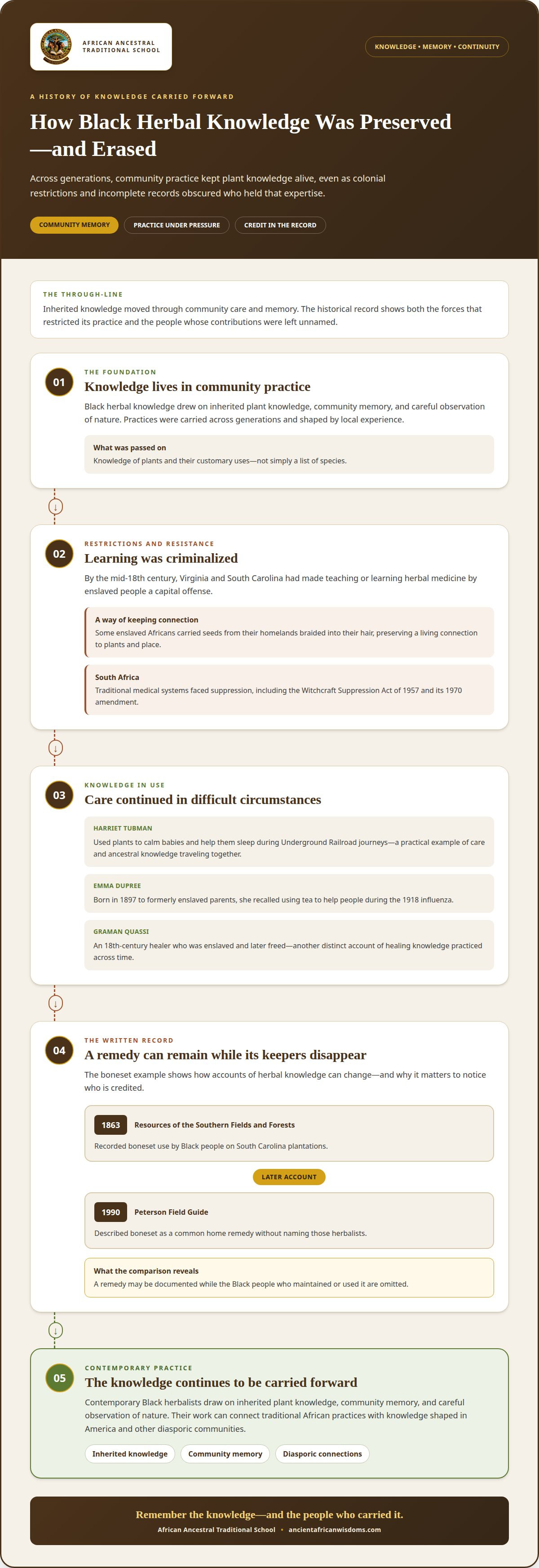
Black herbal knowledge has crossed generations despite colonial suppression and historical erasure. Harriet Tubman, Emma Dupree, and Graman Quassi offer distinct examples of healing knowledge preserved and practiced across time.
Ancestral Knowledge in Contemporary Practice
Contemporary Black herbalists draw on inherited plant knowledge, community memory, and careful observation of nature. Their work can connect traditional African practices with knowledge shaped in America and other diasporic communities. Harriet Tubman used plants to calm babies and help them sleep during Underground Railroad journeys. Her example shows how practical care and ancestral knowledge could travel together, even under severe constraints. Learning this history helps readers see herbal practice as cultural knowledge, not simply a list of species.
Appropriation and Erasure of Herbal Knowledge
Erasure occurs when records preserve a remedy but omit the Black people who maintained or used it. The 1863 edition of Resources of the Southern Fields and Forests recorded boneset use by Black people on South Carolina plantations. The 1990 Peterson Field Guide later described boneset as a common home remedy without naming those herbalists. Comparing these accounts helps readers notice who gets credited when knowledge becomes published reference material.
Black Folk Healing Under Colonial Rule
Colonial power often restricted Black people’s access to herbal learning and practice. By the mid-18th century, Virginia and South Carolina had made teaching or learning herbal medicine by enslaved people a capital offense. Enslaved Africans sometimes carried seeds from their homelands braided into their hair, preserving a living connection to plants and place. In South Africa, traditional medical systems faced suppression, including the Witchcraft Suppression Act of 1957 and its 1970 amendment.
Black Herbalists, Teachers, and Further Reading
Historical accounts of Black healers offer readers a way to follow knowledge across generations. Graman Quassi was an 18th-century healer who was enslaved and later freed; Emma Dupree, born in 1897 to formerly enslaved parents, recalled using tea to help people during the 1918 influenza. Read these stories alongside Resources of the Southern Fields and Forests, noting whose expertise each account names. That comparison makes the record itself part of learning.
Spiritual and physical approaches to healing
Traditional healing can address bodily concerns alongside spiritual wellbeing, with approaches shaped by community and ancestry. In the United States, herbal product and consultation costs depend on the plant, preparation, sourcing, and scope of the consultation; prices are provided after a quote request.
Spiritual Dimensions of Healing
Spiritual healing uses ritual and sacred plants to support relationships with ancestors, spiritual forces, and community. Myrrh, for example, is used to bless and purify the spirit during prayer and other rituals. In Afro-Brazilian regions, rue may be used in spiritual bathing rituals. These practices matter because healing can involve belonging, meaning, and spiritual balance, not only attention to physical symptoms.
Physical Healing Practices
Physical approaches use plants and preparations within inherited systems of care. In South Africa, Sutherlandia microphylla is being studied for use among people with HIV. The World Health Organization says it may increase energy, appetite, and body mass. This research context is not proof that a plant remedy can replace medical treatment. Understanding the distinction helps readers separate traditional use from evidence about a specific health outcome.
Community Herbalism and Accessible Care
Community herbalism is shared plant knowledge passed through relationships, practice, and local traditions. Across Africa, the ratio of traditional healers to the population is one to 500, illustrating the place of these practitioners in community life. Access may also depend on familiar plants and knowledge shared within families. For readers, this community context helps explain why a remedy’s meaning and use can differ between cultural settings.
Healing and Diagnostic Practices
Healing and diagnosis may consider a person’s physical condition, mental wellbeing, and spiritual life together. In Goma, Congo, a study reported anxiety among 63% of participants, psychosis among 37%, and depression among 30%. Researchers identified 30 plant species used to support people with mental health needs there. These figures describe that study and its setting, not a universal diagnosis or a proven treatment for every person.
Advantages and disadvantages of herbal medicine
Plant-based remedies can carry cultural knowledge and offer practical ways to engage with local botanical traditions. Their value depends on accurate identification, preparation, and a clear understanding of their limits.
Advantages of Herbal Medicine
Herbal medicine connects people with remedies rooted in place, observation, and inherited practice. An estimated 5,000 African plant species are used to support aspects of health, reflecting a broad body of knowledge rather than one universal remedy. Learning a plant’s traditional context can deepen understanding of its cultural significance. It also encourages attention to where a botanical material comes from and how communities have used it.
Some plants also have ecological and practical value beyond their healing traditions. Devil’s claw, native to southern Africa, takes about four years for its tuber to mature. That long growth period makes sustainable sourcing important. Knowing a remedy’s origin helps readers consider both cultural knowledge and the health of the land that sustains it.
Disadvantages of Herbal Medicine
Herbal remedies can be difficult to assess when plant identity, preparation, or strength varies. A familiar common name may refer to different species, while a tea, powder, or extract may use different plant parts and concentrations. These differences affect how a remedy is understood and used. Tradition offers valuable context, but it doesn’t by itself establish safety or effectiveness for every person or condition.
Sourcing creates another concern. Harpagophytum procumbens is listed under CITES Appendix II, where international trade is monitored and regulated. Warburgia ugandensis is listed as Vulnerable on the IUCN Red List of Threatened Species. These examples show why demand for botanical remedies must be considered alongside conservation. Before using a plant remedy, identify the species and preparation, and consider how it fits with other care. Herbal medicine should not replace urgent medical attention.
To deepen your understanding of the traditions surrounding plant-based healing, explore ancestral spiritual teachings.
African Ancestral Traditional School: African Ancestral Traditional School Levels
Ancient African Wisdoms offers structured learning levels for readers who want to explore African heritage beyond herbal remedies. Its courses bring together ancestral spiritual teachings and learning about African spirituality, culture, and tradition. Students can progress through the learning path and connect with a community of learners, while exploring spiritual rituals as part of the teachings.
This learning path may suit you if you’re seeking a deeper cultural and spiritual framework rather than guidance on choosing or using a particular herb. Explore the teachings at a pace that supports reflection, and let your questions shape what you study next.
Visit African Ancestral Traditional School to explore the teachings.
Carry the Learning Forward
Let your next step be guided by curiosity, care, and respect for the communities that have preserved this knowledge. As you explore African Herbalism, keep asking how a teaching was carried forward, what role it serves, and how cultural understanding can sit alongside thoughtful care for your wellbeing. These questions make learning more than collecting remedies; they help you approach ancestral knowledge with attention and humility.
You can continue that exploration with Ancient African Wisdoms. If you’re ready to deepen your connection with African heritage and spiritual teachings, explore the school’s online learning path and take the next step in your studies.
Contact African Ancestral Traditional School, and take your next step with intention.
Frequently Asked Questions
What is African herbalism and how does it vary across regions and cultures?
African herbalism refers to plant-based healing knowledge held within diverse African and diasporic traditions. Practices vary with local species, language, cultural beliefs, and knowledge passed through families or communities. A remedy’s name or meaning in one place may not apply elsewhere. When learning about a plant, note the community and tradition associated with its use rather than treating all African practices as one system.
How are African herbal remedies prepared and traditionally administered?
Preparation and administration depend on the plant, the part used, and the tradition guiding its use. A remedy might be described as a tea, while another practice may involve a different preparation or a spiritual ritual. These descriptions are not interchangeable instructions. To understand a particular remedy, learn its local name, preparation context, and customary purpose from a reliable cultural source; don’t infer how to use it from a plant name alone.
What scientific evidence supports the safety and effectiveness of African herbal medicines?
Evidence must be considered plant by plant and preparation by preparation; a history of traditional use is not, by itself, proof of safety or effectiveness. Research can examine plant identity, preparation, potential effects, and risks, but findings for one extract don’t establish results for every form of that plant. For a specific remedy, look for published research that identifies the exact botanical material and the question studied.
What are the risks, side effects, and drug interactions of African herbal remedies?
Risks depend on the exact plant, its preparation, and the medicines a person takes. Misidentification or inconsistent ingredients can also complicate safe use. Before combining a remedy with prescription or over-the-counter medicine, share its plant name, product label, and preparation with a pharmacist or healthcare professional. Don’t stop prescribed treatment or substitute an herbal remedy for urgent care without a medical plan.
How can consumers in the United States identify reputable African herbal products and practitioners?
Look for clear product information, including the botanical name, plant part, ingredients, preparation, and source. Prefer practitioners who explain their training and cultural context plainly, describe the limits of their approach, and welcome questions about safety. Keep the label and product details available for your healthcare team. Avoid relying on dramatic healing promises or vague claims that don’t identify the plant or intended use.
How do African herbalism and conventional medicine differ, and can they be used together safely?
Traditional and conventional approaches can differ in how they understand health, select treatments, and evaluate outcomes. Traditional approaches may draw on cultural and ancestral knowledge, while conventional care typically uses clinical assessment and evidence-based treatments. Using both requires clear communication: tell your healthcare team about every herb, tea, or preparation you use, and discuss possible interactions before combining treatments. Keep prescribed care in place unless your clinician changes the plan.


